
From rating facial features and chasing ideal body proportions to using online slang to declare who looks better, a new internet vocabulary is exposing how appearance is becoming a measure of social status among young people.
For a generation that has grown up documenting its lives online, looking good has increasingly become more than a matter of personal preference. It is also about how one is perceived, evaluated and compared. Across social media platforms, conversations around facial features, skin, fitness, hairstyles, body proportions and attractiveness are becoming increasingly visible, creating an internet culture where appearance can feel like a continuous competition.
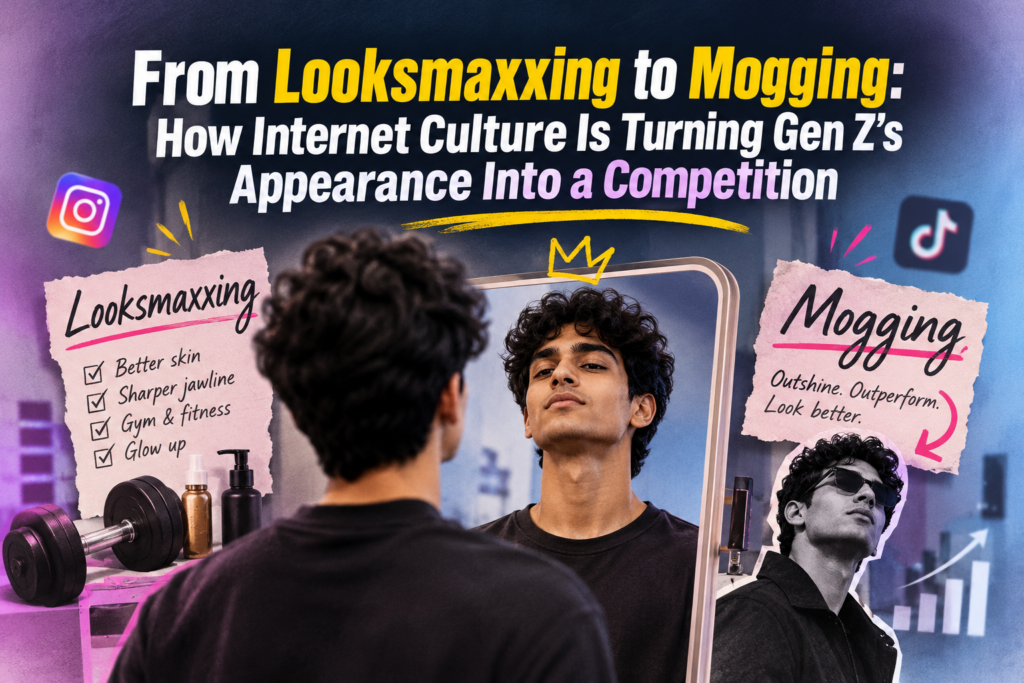
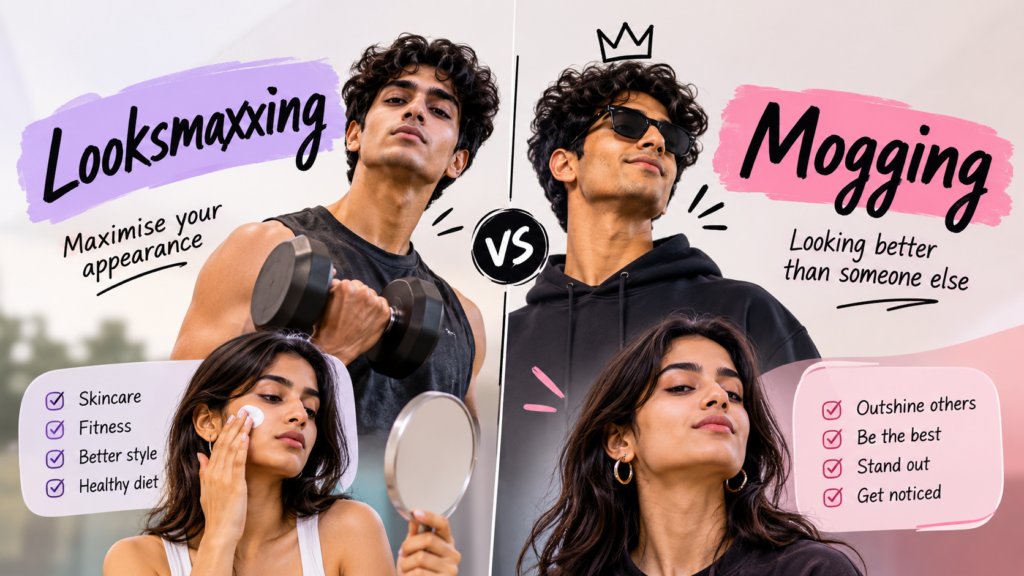
Two terms capture different sides of this development: looksmaxxing and mogging.
Looksmaxxing refers to efforts to maximise one’s physical attractiveness, often through grooming, skincare, fitness, fashion and, in more extreme online communities, questionable techniques intended to change facial structure or body proportions. Mogging, meanwhile, describes outshining someone in a way that makes the other person appear comparatively less attractive, less impressive or less dominant.
The two expressions have travelled through different corners of internet culture, but they point towards a common idea: physical appearance is increasingly being discussed as something that can be measured, improved and ranked.
The growing popularity of these terms raises a larger question. Is the internet simply encouraging young people to take greater interest in their appearance, or is it turning attractiveness into another performance metric against which they are expected to compete?
When self-improvement becomes a digital trend
The desire to look better is hardly new. Fashion, grooming, bodybuilding, beauty products and fitness have always been part of youth culture. What is changing is the language, visibility and intensity with which appearance is discussed online.
Looksmaxxing has emerged from online communities that approach physical attractiveness almost like an optimisation exercise. Participants discuss everything from skincare routines and hairstyles to posture, muscle development, facial symmetry and perceived physical advantages.
At its more conventional end, the trend overlaps with familiar self-improvement activities. Young people experimenting with a better haircut, developing a fitness routine, improving their dressing sense or following a skincare regimen are not necessarily participating in anything extreme.
However, some online spaces take the idea considerably further. Facial features are broken down into supposed measurements of attractiveness, while height, jawline, eye shape, skin quality and facial proportions are discussed as though they determine a person’s social standing.
This is where the trend becomes more complicated. An activity that might begin with the intention of becoming healthier or more confident can gradually turn into an attempt to correct every perceived physical imperfection.
The internet does not necessarily create these insecurities, but it can make them more visible, measurable and difficult to ignore.
Mogging: When looking better becomes about looking better than someone else
If looksmaxxing is about improving one’s appearance, mogging introduces a competitive dimension.
The term is believed to have originated from AMOG, short for ‘alpha male of the group’, and was associated with bodybuilding and online male-dominance communities. It subsequently spread through manosphere and incel-related spaces before entering broader internet vocabulary.
Today, the expression is frequently used in a more casual or ironic way. Someone might say that one actor mogs another, that a particular outfit mogs everything else at a college event, or that a new smartphone mogs its predecessor.
The meaning has expanded beyond physical appearance. It can refer to confidence, fashion, fitness, social status and even performance.
Yet its original association with comparison remains important. Mogging is not simply about looking good. It is about looking better than somebody else.
That distinction reflects a broader feature of social media culture. Personal improvement can be satisfying on its own, but digital environments often encourage people to evaluate themselves through comparisons with others.
A fitness achievement becomes a transformation photograph. A new outfit becomes a post waiting for reactions. A carefully edited photograph becomes an opportunity to measure engagement. The question can gradually shift from whether someone feels good about themselves to whether they look better than the people around them.
The algorithmic beauty contest
Social media has changed the way appearance-related content is produced and consumed.
Instagram, YouTube and short-form video platforms have made grooming tutorials, fitness transformations, skincare advice, fashion inspiration and beauty commentary easily accessible. A young person interested in improving their appearance can find thousands of creators offering routines, recommendations and personal experiences.
There are clear benefits. Information about skincare, exercise, nutrition, personal styling and grooming is more accessible than it once was. Creators have also made conversations about men’s grooming and personal care more mainstream.
But there is another side to this accessibility.
Recommendation systems can repeatedly expose users to similar content once they begin engaging with a particular topic. Someone watching a few fitness transformation videos may encounter more content about body composition, facial attractiveness, ideal proportions and physical comparisons.
This does not mean that every platform deliberately promotes insecurity. Nor does it mean every user will experience the same content journey. However, repeated exposure can make a particular appearance ideal seem more universal or necessary than it really is.
There is also a difference between seeing a transformation and understanding what went into producing it. Lighting, camera angles, editing, filters, professional styling and carefully selected photographs can substantially influence how someone appears online.
The result is a comparison between an ordinary, unfiltered everyday self and somebody else’s carefully constructed digital presentation.
For young audiences still developing their identities, that distinction matters.
The business of looking better
The growing visibility of appearance-focused content has also created commercial opportunities.
Skincare, cosmetics, haircare, fitness, fashion, nutrition, grooming and wellness brands are all part of a wider market that speaks to consumers’ desire to look and feel better.
Creator-led recommendations have become particularly influential in these categories. A skincare routine, gym transformation or grooming video can introduce audiences to products and services in a format that feels personal rather than traditionally promotional.
For brands, the appeal is understandable. Appearance is a recurring consumer interest, and content around personal improvement can generate substantial engagement.
However, looksmaxxing creates an interesting distinction for marketers.
There is a difference between selling confidence and selling inadequacy.
A brand encouraging someone to develop a skincare routine or pursue a fitness goal is participating in a familiar self-care conversation. A brand suggesting that someone is socially inferior because of their facial features, body type or height would be entering much more problematic territory.
This is particularly important when marketing to younger audiences. Campaigns built around physical insecurity may attract attention, but they can also generate criticism if they appear to exploit vulnerabilities.
The opportunity for brands is to participate in conversations around self-expression, personal care and confidence without reinforcing the idea that everyone must conform to a narrow physical ideal.
Is masculinity becoming part of the appearance conversation?
One of the more interesting aspects of looksmaxxing is its strong association with male-focused internet communities.
For years, conversations around beauty standards and appearance pressures were frequently discussed through the experiences of women. However, online trends such as looksmaxxing, mogging and facial-rating content indicate that physical appearance is also becoming a prominent subject in conversations about masculinity.
Height, muscularity, jawline definition, facial symmetry and perceived attractiveness can become markers through which young men evaluate themselves and others.
Fitness and grooming are not inherently problematic. In fact, greater interest in personal care among young men can challenge older assumptions that grooming and skincare are exclusively feminine concerns.
The concern emerges when physical characteristics are presented as fixed indicators of personal worth, romantic success or social dominance.
Some online communities promote rigid hierarchies in which men are categorised according to their perceived attractiveness. Such frameworks can reduce complicated human relationships to a ranking system based on appearance.
This can be particularly limiting for young men who are still developing their understanding of confidence, identity and relationships.
It is also important not to assume that these conversations are exclusive to men. Women face their own extensive appearance pressures through beauty trends, filters, body-image expectations and influencer culture. The language and communities may differ, but the underlying culture of comparison can affect audiences across genders.
India: A new vocabulary for an old pressure?
India offers an interesting context for understanding these developments.
Appearance has long influenced popular culture, from cinema and advertising to fashion, matrimonial expectations and celebrity endorsements. Fairness advertising, body-image ideals and the emphasis on conventional attractiveness have all shaped consumer conversations over several decades.
What is changing is the way young Indians encounter and discuss these expectations.
College students today are exposed to global creators, international fitness trends, skincare communities, celebrity transformations and online discussions about attractiveness. At the same time, they participate in distinctly Indian conversations around fashion, grooming, regional beauty standards and social presentation.
The language of looksmaxxing and mogging provides a new vocabulary through which some of these conversations can take place.
However, it would be premature to assume that the terms have become mainstream among Indian college students simply because they are visible in international internet culture or covered by Indian media.
There is a meaningful distinction between recognising a slang term, using it occasionally as a joke and actively subscribing to the ideology associated with it.
That distinction deserves closer examination.
For Indian Gen Z, a useful research question is whether these trends are changing actual behaviour: Are students spending more on grooming and skincare? Are young men becoming more conscious of facial features and body proportions? Do students compare themselves more frequently with influencers and peers? And do they consider these trends harmless entertainment or an additional source of social pressure?
These questions cannot be answered through online trends alone. They require conversations with young people themselves.
Where does self-improvement end and comparison begin?
There is nothing inherently wrong with wanting to look better. Fitness, grooming, skincare, fashion and personal presentation can contribute to confidence and self-expression.
The challenge is understanding when those interests become driven by constant comparison.
A person choosing to exercise because they enjoy feeling healthier is making a different decision from someone who believes they must achieve a particular body type to be accepted.
Similarly, experimenting with fashion can be an expression of individuality. Feeling compelled to look better than every other person in a photograph is a different experience.
The distinction is important because internet culture can make these motivations difficult to separate.
There is also a risk of treating physical attractiveness as a universal and objective hierarchy. Preferences vary across individuals and cultures, while photographs and videos offer incomplete representations of how people look and behave in real life.
For young audiences, developing the confidence to participate in digital culture without constantly evaluating their own appearance against others may be as important as learning to navigate the platforms themselves.
The bigger picture
Looksmaxxing and mogging may eventually lose their popularity as internet slang. Another set of expressions will almost certainly replace them.
But the cultural development they represent is unlikely to disappear as quickly.
Digital platforms have made personal appearance more visible, more discussable and easier to compare. Creators have built communities around improvement, brands have found commercial opportunities in self-care, and online subcultures have developed increasingly elaborate vocabularies to describe attractiveness and social status.
For Gen Z, the question is no longer simply whether they want to look good. It is increasingly about who defines what looking good means, how those standards are communicated and whether personal improvement is being confused with competition.
The most important distinction may be this: looking better can be a personal choice, but feeling that you must look better than everyone else is a very different proposition.
And in an internet culture where almost everything can be rated, ranked and compared, learning to recognise that difference may be one of the more important challenges facing the next generation.