
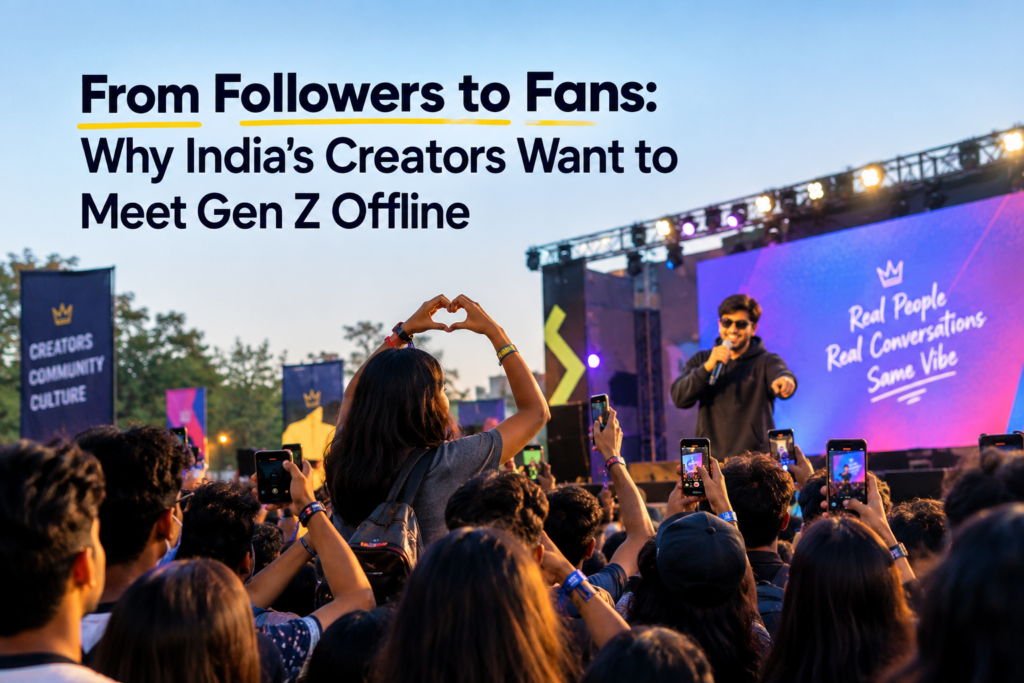
As India’s creator economy matures, fan meet-ups, live shows and community-led festivals are creating new opportunities for creators and brands. The bigger question is whether online fandom can translate into lasting real-world relationships.
For years, the success of a digital creator was measured in followers, views, watch time and brand partnerships. But a different question is becoming increasingly important: how many of those followers would actually turn up to meet the creator in person?
Across India’s creator economy, live shows, fan gatherings, gaming festivals and interactive experiences are creating opportunities to take digital communities beyond the screen. For creators, these events can open up additional revenue streams and strengthen audience relationships. For brands, they offer an opportunity to engage young consumers through shared experiences rather than conventional advertising alone.
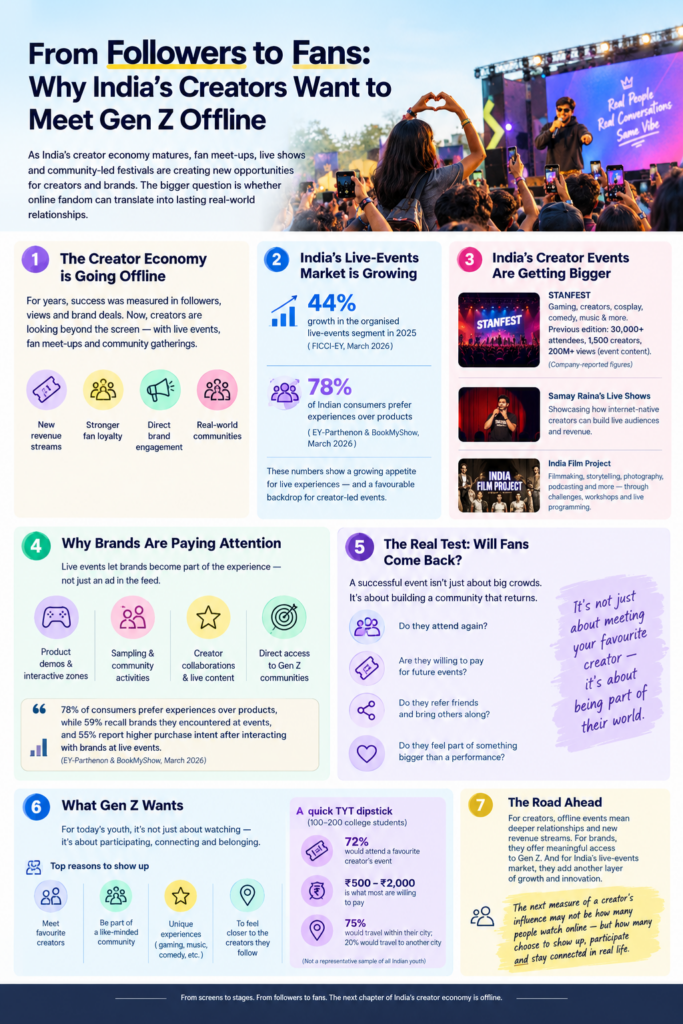
The shift comes at a time when India’s live entertainment industry is expanding. According to the FICCI-EY report Stories, Scale and Impact: Unlocking India’s Media and Entertainment Economy, released in March 2026, the organised live-events segment grew 44% in 2025. The growth was driven by a mix of ticketed concerts, large public events, weddings, government functions and religious gatherings. The figure is not specific to creator-led events, but it reflects a broader market in which live experiences are attracting growing commercial interest.
For India’s creators, the opportunity is to turn digital attention into something audiences can experience together.
From watching creators to being part of their communities
The appeal of a creator is often built through repeated interactions. Audiences watch their videos, follow their opinions, participate in comment sections and return to their channels. Over time, a creator can become a familiar presence in a young person’s daily life.
Meeting that creator in person offers a different kind of experience.
A live podcast, a gaming festival or a fan meet-up allows audiences to interact with creators and, just as importantly, meet other people who share their interests. The experience is no longer limited to watching someone else’s content; it becomes an opportunity to participate in a community.
This distinction matters for Gen Z, a generation whose entertainment, friendships and cultural interests are increasingly shaped by digital platforms. Online communities can connect people across cities, languages and interests, but physical gatherings create opportunities for those connections to become tangible.
The appeal, however, should not be reduced to a universal claim that young people prefer offline experiences to digital ones. For some fans, watching a creator online is sufficient. Others may be willing to travel, pay for tickets or spend an entire day at an event. Understanding what differentiates these audiences is central to the business opportunity.
India’s creator events are becoming bigger propositions
One example is STANFEST, the festival organised by social gaming and fan-engagement platform STAN.
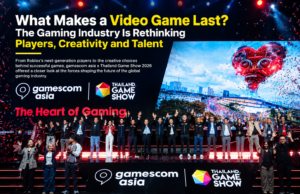
Ahead of its fourth edition, scheduled for 31 October 2026 at Presidency University in Bengaluru, the platform has positioned the event around gaming, creator-fan interactions and community participation. Its announced programme includes esports, cosplay, creator meet-and-greets, comedy, live music and multiple experience zones.
According to the organisers, the previous edition attracted more than 30,000 attendees and 1,500 creators, while festival-related content generated over 200 million views. These are company-reported figures, rather than independently audited attendance or audience measurements, but they illustrate the scale that a creator-and-community event can aspire to achieve.
The model is significant because it brings together several interests under one roof. Gaming attracts competitive players and spectators; creators bring established audiences; cosplay gives fans an opportunity to participate; and live performances provide entertainment beyond the digital content itself.
The event becomes more than a collection of appearances. It is designed as a meeting point for people who already share interests online.
Other Indian formats demonstrate different approaches to the same opportunity. Samay Raina’s live comedy properties have shown how an internet-native entertainer can extend an audience relationship to the stage. Creator festivals such as India Film Project bring together filmmaking, storytelling, photography, podcasting and other creative disciplines through challenges, workshops and live programming.
These examples serve different audiences and business objectives. Together, they demonstrate that creator-led experiences need not be restricted to celebrity meet-and-greets. They can encompass entertainment, learning, collaboration and participation.
Why brands are paying attention
For marketers, the attraction is the possibility of reaching audiences in an environment where they are actively participating.
A conventional influencer campaign might deliver a product mention, a short video or a sponsored post. At a live event, a brand can potentially become part of the experience through demonstrations, interactive installations, competitions, sampling or community activities.
Consider a gaming brand at a creator-led gaming festival. Instead of simply sponsoring a creator’s video, it could provide a space where attendees try its equipment, watch competitions and interact with fellow players. A personal-care brand could explore a different format built around demonstrations, discovery and conversations with relevant creators.
The effectiveness of either approach would depend on the audience, execution and fit between the brand and the event. Attendance alone does not guarantee attention, and attention does not automatically translate into sales.
Nevertheless, the commercial interest is visible in the wider experiential-marketing market.
A March 2026 report by EY-Parthenon and BookMyShow, titled Beyond Attention. Into Immersion, found that 78% of surveyed Indian consumers preferred experiences over products. Its research also reported that 59% of live-event attendees recalled brands they encountered on-site, while 55% reported higher purchase intent after interacting with brands at events. The findings were based on post-event surveys involving 7,450 attendees.
These figures relate to live events broadly, not exclusively to creator-led gatherings. Still, they provide a useful indication of why marketers are examining experiences as a complement to digital advertising.
For brands targeting Gen Z, the next challenge is to identify which creator communities offer genuine relevance, rather than selecting partners solely on follower counts.
From one-off events to sustainable businesses
An event can generate revenue through ticket sales, sponsorships, merchandise, premium access and partnerships. Yet building a sustainable event property requires more than assembling a popular line-up.
Creators and organisers must consider venue costs, production, security, audience acquisition, ticket pricing and the commercial expectations of sponsors. They must also decide whether an event is a one-time celebration or a repeatable format that can travel across cities and audience segments.
There is a further distinction between an audience that turns up once and a community that returns.
Repeat attendance, referrals, participation between events and willingness to pay for future experiences may offer more meaningful indicators of loyalty than a single large turnout. These measures can help organisers understand whether the event has created lasting value or simply capitalised on a moment of online popularity.
The model also presents opportunities beyond India’s largest metropolitan markets. Regional creators may have strong relationships with audiences in specific languages or communities, making smaller, locally organised gatherings worth exploring. However, the commercial viability of such events will depend on local demand, affordability, infrastructure and sponsor interest.
For creators, therefore, offline expansion need not always mean a stadium or a large convention. A smaller gathering with a clearly defined audience may offer a more sustainable starting point.
The real test is whether fans return
The creator economy’s move offline raises a more interesting question than how many people can be brought into a venue: what makes them want to come back?
A creator may attract an audience through humour, gaming, education, lifestyle content or a distinctive point of view. But an event must translate that online relationship into an experience worth leaving home for. Fans need a reason to participate, not merely an opportunity to stand in the same room as someone they follow.
That is where community becomes commercially relevant. When audiences interact with each other, share experiences and feel included in something beyond a performance, the value of an event may extend beyond the day itself.
For brands, the implication is equally important. The most effective creator partnerships may be those that contribute something useful to the community, rather than treating fans as a captive audience for promotional messages.
India’s expanding live-events market provides a favourable backdrop for experimentation. But the long-term winners will not necessarily be the creators who attract the biggest crowds. They may be the ones who understand their audiences well enough to build experiences people want to return to.
The next measure of a creator’s influence, then, may not be limited to how many people watch online. It could also be how many choose to show up, participate and become part of a community in real life.
Sources: FICCI-EY, Stories, Scale and Impact: Unlocking India’s Media and Entertainment Economy (March 2026); EY-Parthenon and BookMyShow, Beyond Attention. Into Immersion (March 2026); STAN’s announcement on STANFEST 2026 (October 2026).