


From road trips and scuba diving to exotic beaches and international travel, young Indians are dreaming of experiences that promise adventure, personal growth and lasting memories. But financial constraints, time and safety concerns continue to shape how far those dreams can take them.
For a generation growing up in a world of travel reels, destination guides and adventure videos, the idea of travel goes beyond visiting a new place. It is about collecting experiences, stepping outside familiar surroundings and creating memories that last long after a trip ends.
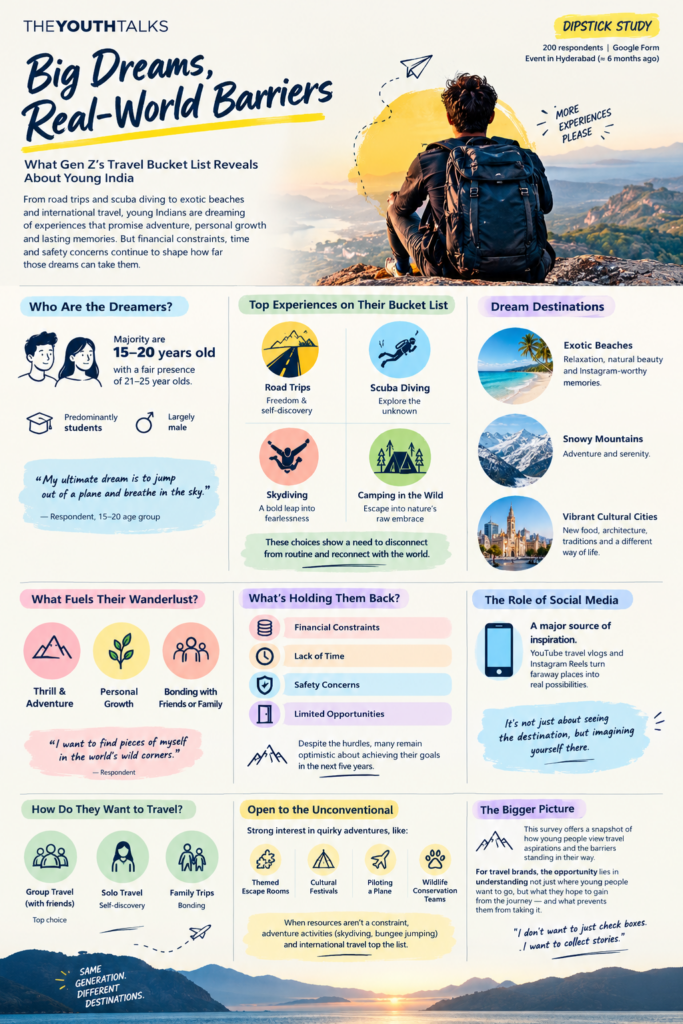
A dipstick survey conducted among 200 young respondents alongside an event in Hyderabad offers a glimpse into these aspirations. With most respondents belonging to the 15–20 age group and a sizeable presence of young adults aged 21–25, the findings capture the perspectives of young people who are beginning to imagine the experiences they want to pursue beyond their everyday routines.
The survey points to a generation drawn towards adventure, natural landscapes and shared experiences. Yet, alongside these ambitions, practical considerations such as money, time and safety remain important barriers.
The Experiences That Make the Bucket List
When asked about the experiences they would like to pursue, respondents gravitated towards activities such as road trips, scuba diving, skydiving and camping in the wild.
Each offers something different. Road trips promise freedom and the opportunity to explore places at one’s own pace. Scuba diving offers a chance to discover an unfamiliar underwater world, while skydiving represents the thrill of confronting fear and trying something extraordinary. Camping, meanwhile, offers an opportunity to step away from familiar routines and spend time in nature.
These choices suggest that, for the respondents surveyed, travel aspirations are not limited to sightseeing. The activities they want to experience also promise excitement, challenge and personal discovery.
One respondent from the 15–20 age group described the ambition simply: “My ultimate dream is to jump out of a plane and breathe in the sky.”
The sentiment captures the appeal of experiences that feel different from everyday life. Whether it involves an adrenaline-fuelled activity or an unfamiliar landscape, the attraction lies partly in doing something that might otherwise remain a distant dream.
From Exotic Beaches to Snowy Mountains
The destinations young people imagine visiting reflect a similar desire for variety.
Exotic beaches emerged as the most popular destination type in the survey, offering the promise of scenic landscapes, relaxation and memorable experiences. Snow-covered mountains and vibrant cultural cities also featured among respondents’ aspirations.
These preferences span different ideas of an ideal getaway. A beach holiday can mean slowing down and escaping routine, while a mountain trip can offer adventure and solitude. Cultural cities promise something else entirely: new food, architecture, local traditions and the opportunity to experience a different way of life.
For travel businesses, these distinctions matter. Young travellers are not necessarily looking for a single kind of holiday. Their aspirations can range from quiet retreats to physically demanding adventures and culturally immersive trips.
Understanding what motivates each choice can help travel brands think beyond standard destination packages and develop experiences that appeal to different interests, budgets and travel styles.
What Is Driving Their Wanderlust?
The survey identified thrill and adventure, personal growth, and bonding with friends or family among the leading motivations for pursuing bucket-list experiences.
Adventure provides the immediate excitement of doing something unfamiliar. Personal growth offers a deeper appeal: the possibility of developing confidence, overcoming fears or discovering new interests. Travelling with friends or family adds a social dimension, turning a trip into a shared experience.
One respondent expressed the desire to discover something beyond familiar surroundings: “I want to find pieces of myself in the world’s wild corners.”
Such aspirations point towards the emotional value attached to travel. The destination matters, but so does what the experience represents to the traveller.
For young people, particularly those still studying or beginning their professional lives, these ambitions can also represent possibilities for the future. A trip may be an opportunity to celebrate a milestone, strengthen friendships or experience a degree of independence.
However, the survey captures stated motivations rather than proving how these preferences translate into actual travel behaviour. The distinction is important: wanting an experience is the first step, but making it happen requires resources, planning and opportunity.
The Gap Between Dreams and Reality
Financial constraints emerged as a prominent barrier to pursuing bucket-list activities. Lack of time, safety concerns and limited opportunities were also cited.
The contrast is revealing. An international holiday, a scuba-diving course or a skydiving experience may be highly desirable, but the overall cost can place it beyond the immediate reach of a student. Even a domestic trip involves transport, accommodation, food and other expenses that must fit within an available budget.
Time presents another challenge. Academic commitments, examinations, internships and early-career responsibilities can make it difficult to coordinate travel, particularly when a trip involves several people.
Safety concerns and limited access to suitable opportunities can further influence decisions, especially for unfamiliar activities or destinations.
These barriers highlight an important consideration for the travel industry: aspiration alone does not guarantee participation. Businesses hoping to attract young travellers need to understand what prevents them from moving from interest to action.
Affordable packages, transparent pricing, accessible experiences and clear safety information could help address some of these concerns. Flexible itineraries and options suited to smaller groups may also make planning easier.
The survey also indicated that many respondents remained optimistic about pursuing their bucket-list goals over the following five years. While this reflects their stated intentions at the time of the survey, it suggests that financial and practical barriers do not necessarily eliminate the desire to travel.
How Social Media Shapes the Dream
Social media emerged as an important source of travel inspiration for respondents.
YouTube travel vlogs and Instagram Reels can bring unfamiliar destinations and activities into everyday conversations. A beach, mountain trail or adventure sport discovered online can become something a young person saves, shares with friends or adds to a future travel plan.
In this sense, digital platforms function as virtual vision boards. They expose audiences to possibilities they might not otherwise encounter and make distant experiences feel more tangible.
Yet inspiration and action are not the same. Seeing an attractive destination online does not establish whether a person will visit it, can afford it or trusts the information presented.
For travel brands, the challenge is therefore not simply to generate visibility. It is to understand how inspiration becomes consideration and, eventually, a booking.
Useful information about costs, accessibility, safety and logistics can help bridge the gap between an appealing image and a realistic travel plan.
Why Travelling Together Matters
Group travel with friends emerged as the preferred way to pursue bucket-list experiences among respondents, while some expressed a preference for solo or family trips.
Travelling with friends can make an experience more enjoyable and provide opportunities to share costs, although coordinating budgets, schedules and preferences can also complicate planning. Solo travel, by contrast, can offer greater independence, while family trips may prioritise comfort, convenience and shared time.
The range of preferences suggests that youth travel cannot be reduced to one universal model. The ideal experience depends on individual motivations, circumstances and the people with whom someone wants to travel.
Respondents also showed openness to unconventional activities, including themed escape rooms and cultural festivals. Suggestions such as piloting a plane or participating in wildlife conservation activities further illustrate the variety of experiences that can capture the imagination.
When asked what they would prioritise if resources were not a constraint, adventure activities such as skydiving and bungee jumping featured prominently, followed by international travel.
These responses offer a glimpse into the possibilities young people would like to explore when financial limitations are removed.
Beyond the Bucket List
The Hyderabad dipstick offers a snapshot of how a group of young respondents viewed travel aspirations and the barriers standing in their way. It is not a representative portrait of all Indian Gen Z, but it raises useful questions about the relationship between experiences, affordability and aspiration.
For travel businesses, the opportunity lies in understanding not only where young people want to go, but also what they hope to gain from the journey and what prevents them from taking it.
For the young travellers themselves, the bucket list remains a collection of possibilities: some immediate, others requiring years of saving, planning or waiting for the right opportunity.
Ultimately, the appeal of a bucket list may lie less in the number of destinations it contains than in the experiences it represents. A road trip with friends, a first encounter with the underwater world or a journey into unfamiliar mountains can each offer something beyond the destination itself.
As one respondent put it: “I don’t want to just check boxes. I want to collect stories.”