
From high-performance gaming and immersive visuals to personal expression and creator ambitions, Republic of Gamers is building its proposition around a generation that wants more from its gaming machines.
Gaming in India has changed considerably. What was once dismissed by many as a pastime is now part of how young people unwind, socialise, compete and connect with digital communities. For some, it is a casual escape after college or work. For others, it is a serious pursuit involving competitive gaming, streaming, content creation and aspirations of building a career in the gaming ecosystem.
As these interests evolve, so do the devices young people want to use.
A smartphone remains the entry point for many Indian gamers, but those seeking more demanding PC games, competitive performance or a larger gaming setup may eventually consider a dedicated gaming computer. The decision involves more than processing power. Display quality, graphics, cooling, design, portability and the ability to handle demanding applications can all influence the choice.
This is the space in which ASUS’s Republic of Gamers, better known as ROG, has established its identity.
Built around high-performance gaming hardware, ROG offers gaming laptops, desktops, graphics cards, monitors and peripherals. Its laptop portfolio includes the performance-oriented Strix family and the more portable Zephyrus range, among other products.
But what makes a gaming brand relevant to a younger generation? And what does ROG offer gamers who want their machines to keep pace with their ambitions?
1. When performance becomes part of the experience
For someone playing graphically demanding PC games, a computer’s performance can directly influence the experience.
Processing power, graphics capabilities, display refresh rates and thermal management all contribute to how a game looks and runs. A capable gaming machine can also provide headroom for multitasking, recording gameplay and running creative applications.
ROG builds much of its proposition around these requirements.
Its Strix laptops, for instance, are designed for demanding gaming, with configurations featuring powerful processors, dedicated NVIDIA GeForce RTX laptop graphics and high-refresh-rate displays. The specifications vary by model, but the emphasis is on delivering performance for gamers who want more control over their gaming experience.
The appeal is not limited to professional esports players. A college student who spends time playing competitive multiplayer games may value a responsive display, while someone exploring more visually demanding titles may prioritise graphics performance.
For these users, choosing a computer can become a decision about the quality of the experience they want rather than simply purchasing a machine that runs a game.
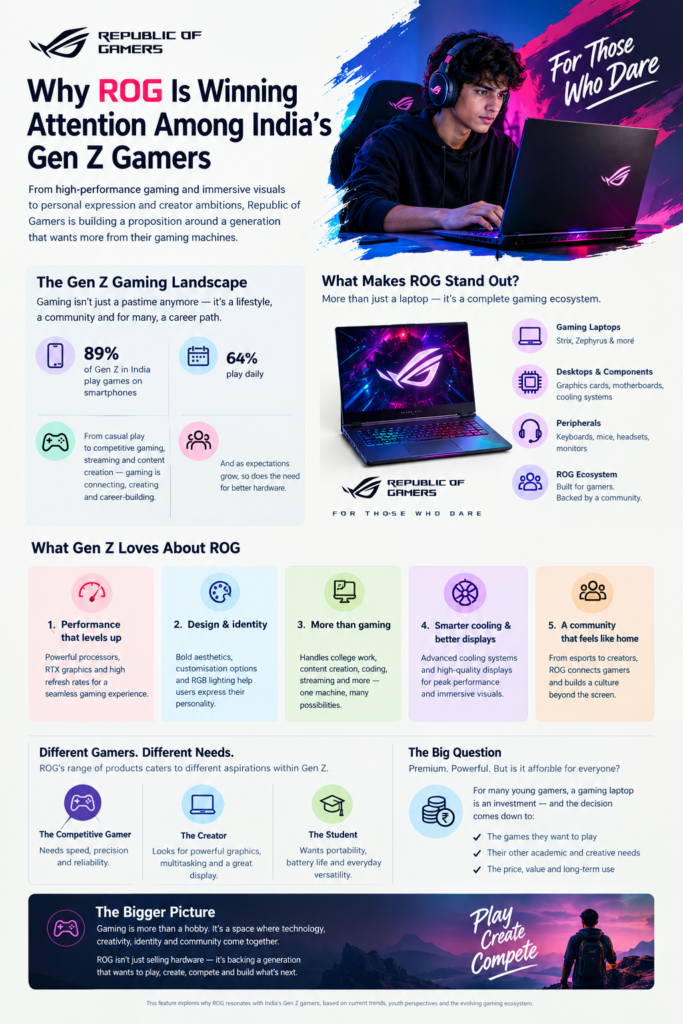
2. Gaming hardware as an expression of identity
Gaming is also a culture, with its own communities, creators, aesthetics and shared interests.
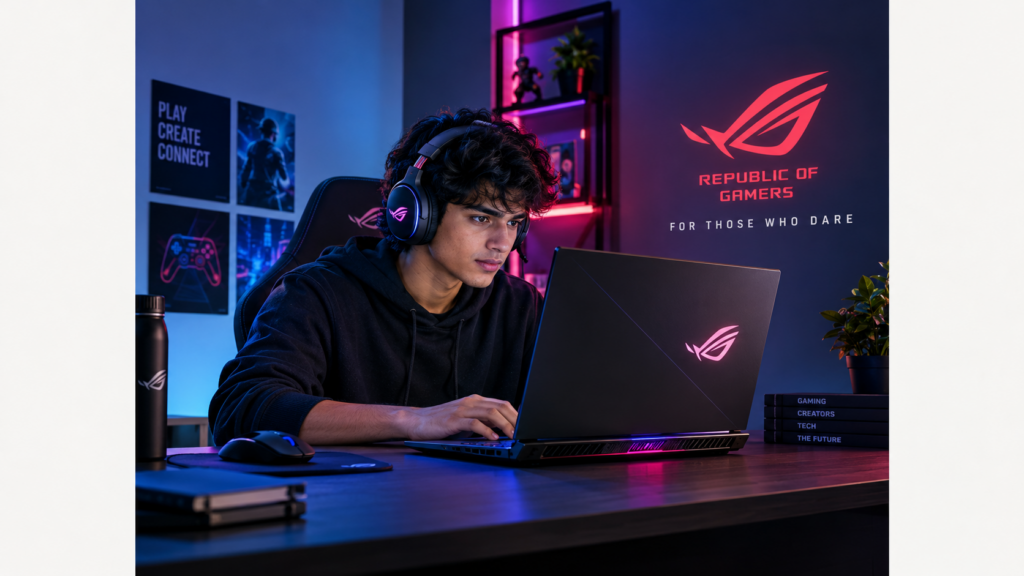
For enthusiasts, a gaming setup can be a personal space. The laptop, keyboard, mouse, headset, monitor and lighting can collectively reflect the owner’s preferences. Design and customisation become part of the experience.
ROG’s distinctive visual identity, illuminated keyboards on selected models and customisation options speak to this enthusiast-oriented approach. Features such as ASUS Aura Sync, where supported, allow compatible lighting across devices to be coordinated.
This is an important distinction in a crowded technology market. While conventional laptops are often selected primarily around everyday computing requirements, gaming laptops can also serve as objects of personal interest.
For some young consumers, that distinction matters. A gaming machine can be both a functional purchase and a reflection of an interest they actively participate in.
That does not mean every Gen Z gamer wants RGB lighting or an elaborate setup. Some prefer understated designs and portability. The broader opportunity for gaming brands is to offer enough variety for different users to find a device that suits their needs.
3. More than gaming: the appeal of a versatile machine
The lives of students and early-career professionals rarely fit neatly into one category.
A computer purchased for gaming might also be used for college assignments, programming, video editing, graphic design, streaming or experimenting with AI tools. For young people exploring multiple interests, this overlap can influence which device they choose.
ROG’s portfolio includes machines that prioritise different combinations of performance, portability and design.
The Strix range is oriented towards high-performance gaming, while the Zephyrus family places greater emphasis on combining powerful hardware with a comparatively portable form factor. Actual capabilities depend on the specific model and configuration.
For a student studying computer science, for example, a capable machine may support both gaming and demanding development workloads. A budding creator may value the combination of graphics performance and a suitable display for editing video.
However, a gaming laptop is not automatically the best choice for every student. Price, battery life, weight, software requirements and the nature of the workload remain important considerations.
The larger point is that gaming hardware increasingly competes for attention within a broader personal technology budget, particularly among users who want one device to support several interests.
4. A display and cooling system can matter as much as raw power
Gaming laptops involve engineering trade-offs. Powerful components generate heat, and sustained performance depends partly on how effectively a machine manages it.
Display technology also shapes the experience. High refresh rates can make motion appear smoother, particularly in fast-paced games, while resolution, brightness and colour reproduction influence visual quality.
ROG highlights these areas across its product portfolio through technologies such as ROG Intelligent Cooling and ROG Nebula displays, depending on the model.
These features matter because the experience of gaming is not determined by a processor or graphics chip in isolation. It depends on how the components work together.
For competitive gamers, responsiveness can be particularly important. For people who play visually demanding games or create digital content, the quality of the display and the machine’s ability to sustain demanding workloads may carry greater weight.
This is where a product-focused brand feature can help readers understand the difference between buying a laptop that happens to run games and choosing a machine designed around gaming requirements.
5. The community behind the hardware
Gaming brands operate in an environment where product specifications are only part of the conversation.
Players discover games through friends, creators, online communities and tournaments. They exchange recommendations, discuss hardware and follow the people who play the games they enjoy.
That creates an opportunity for brands to participate in gaming culture rather than relying exclusively on conventional technology advertising.
ROG’s enthusiast-oriented identity provides a natural connection to this ecosystem. Its broader product range extends from laptops to monitors, graphics cards, peripherals and other components, allowing users to build or expand a gaming setup over time.
For a brand seeking relevance among younger consumers, the challenge is to make that ecosystem meaningful. Product demonstrations, genuine engagement with gaming communities, opportunities to experience hardware and collaborations with credible creators can all help potential buyers understand what a device offers.
The key is authenticity. Young consumers are not a single audience, and the interests of a mobile gamer, an aspiring esports competitor and a PC-building enthusiast can differ substantially.
A credible gaming brand needs to understand these distinctions rather than treating Gen Z as one homogeneous market.
6. The aspiration — and the affordability question
There is another side to the gaming-laptop conversation: cost.
High-performance machines can represent a substantial purchase, especially for students who depend on family support or have limited independent income. In India’s price-sensitive market, the decision to invest in a gaming laptop can involve considerable research and comparison.
ROG occupies the premium end of gaming hardware, although its models differ considerably in specifications and pricing. Buyers must evaluate the actual configuration, the games they intend to play, their other computing needs and how long they expect to use the machine.
For some enthusiasts, investing in better hardware may be worthwhile because gaming is a central interest. Others may find that an entry-level gaming laptop, a different PC configuration or a smartphone better fits their budget and usage.
This makes affordability an important part of the Gen Z story. Aspiration may create interest in a premium brand, but purchase decisions depend on what young consumers can afford and what they believe they will gain from the investment.
Understanding that gap between aspiration and purchase is essential to understanding the youth gaming market.
7. What will determine ROG’s relevance to India’s young gamers?
India’s gaming audience is diverse. It includes casual mobile players, PC enthusiasts, competitive gamers, streamers and people who enjoy gaming socially without any ambition to pursue it professionally.
ROG’s opportunity is not simply to convince all these users to buy the same kind of machine. It is to demonstrate where its products fit within their different needs.
For a PC gaming enthusiast, that might mean performance and cooling. For a creator, it could involve graphics capabilities and display quality. For a student who travels between home and college, portability and everyday usability might matter more.
The next stage of growth for premium gaming hardware will depend on how effectively brands address these distinct requirements, communicate the benefits of their products and demonstrate value relative to competing options.
It will also depend on how the broader Indian gaming ecosystem develops, including access to gaming hardware, the growth of PC gaming communities and the opportunities available to aspiring creators and competitors.
The bigger picture
ROG offers a useful lens through which to examine the relationship between young Indians and gaming technology. Its focus on performance, specialised design, customisation and an ecosystem of compatible hardware reflects the demands of enthusiasts who want more control over their gaming experience.
Whether ROG is India’s preferred gaming-computer brand among Gen Z, however, is a question that requires evidence from young consumers themselves. Brand awareness, purchase consideration, ownership and actual preference are different measures.
For now, the more meaningful question is what today’s young gamers expect from their computers — and how brands such as ROG respond to those expectations.
As gaming intersects with content creation, technology experimentation and online communities, the gaming computer is no longer just a machine for running games. For some young people, it is becoming a tool for exploring interests, building skills and participating in a culture they care about.
And that is where the next chapter of India’s youth gaming story may unfold.
About ROG: Republic of Gamers is ASUS’s gaming-focused brand, with products spanning gaming laptops, desktops, components, displays and peripherals. Explore the official ROG India website for product details and current models.