
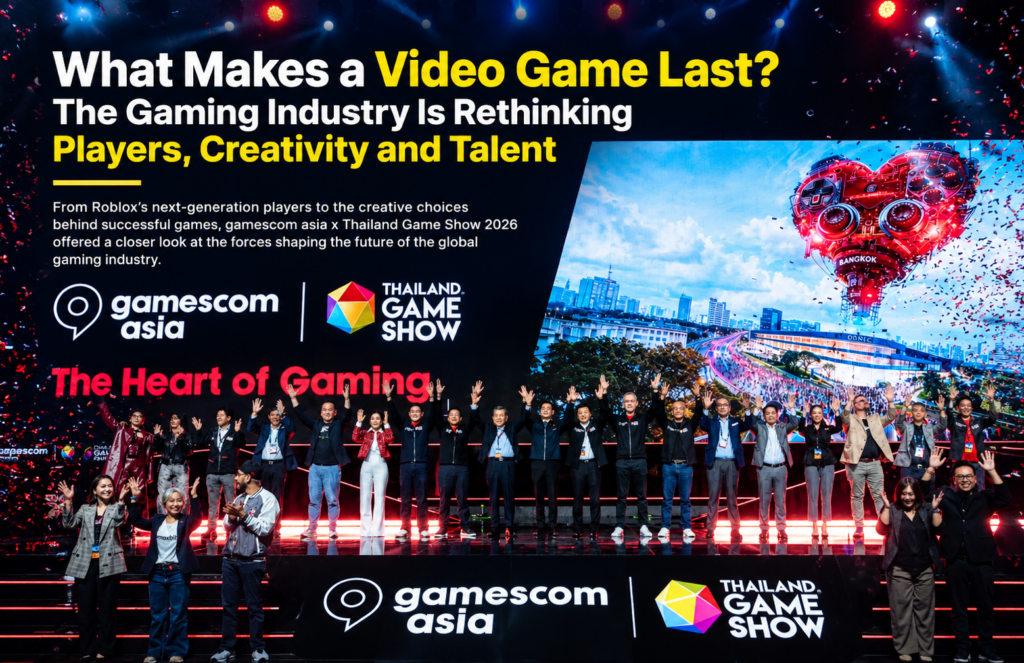
From Roblox’s next-generation players to the creative choices behind successful games, gamescom asia x Thailand Game Show 2026 offered a closer look at the forces shaping the future of the global gaming industry.
The gaming industry has spent years trying to answer a seemingly simple question: what makes people play a game?
But as the market becomes more competitive, the question is changing. It is no longer just about getting players to download a title or spend a few hours exploring its world. Developers and publishers increasingly need to understand what makes people return, what creates lasting communities, and what gives a game the ability to remain relevant long after its launch.
That conversation took centre stage on the second day of the business programme at gamescom asia x Thailand Game Show 2026 in Bangkok. Discussions involving Roblox, DigixArt, former KRAFTON publishing executive Jin Oh and several Southeast Asian gaming companies explored the relationship between player expectations, creative ambition, technology and the long-term business of making games.
The discussions offered a useful perspective on an industry where a successful launch is increasingly only the beginning.
The next generation of players is changing the conversation
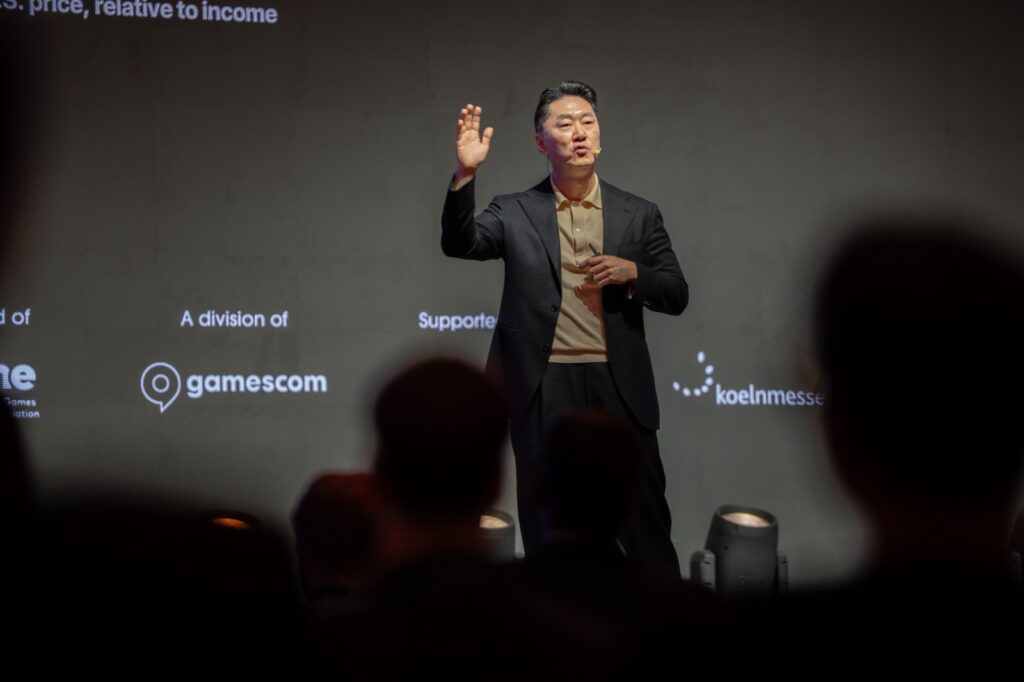
One of the central discussions on Day 2 came from Zhen Fang, Vice President of Roblox International, who spoke about what the next generation of players expects from games.
The significance of this conversation goes beyond any one platform. Younger audiences are growing up in an environment where gaming is not restricted to playing a finished product. They increasingly expect opportunities to create, participate, socialise and shape their own experiences.
Platforms that allow users to build and share experiences have helped expand the definition of gaming. For younger players, the distinction between playing a game, interacting with a community and creating something within a digital environment can be less pronounced than it was for previous generations.
For developers and publishers, this creates a different challenge. Understanding the audience requires looking beyond traditional measures such as downloads and hours played. Community participation, user-generated content, social interaction and the ability to keep experiences fresh are becoming important parts of the conversation.
The larger question for the industry is how to build experiences that remain relevant to audiences whose expectations continue to evolve.
Why some games stay relevant for years
While attracting players is one challenge, retaining them is another.
Jin Oh, former Chief Global Publishing Officer at KRAFTON, drew on his experience with companies including Blizzard, Riot Games and KRAFTON to examine why some games endure for years while others struggle to maintain momentum.
His observation offered a useful perspective on the less visible work behind successful gaming franchises.
“Great games endure when boring stuff never stops,” he said.
The remark points to an important reality of the gaming business. A game’s longevity is rarely determined by its launch alone. It depends on continuous work involving updates, community management, technical maintenance, player support, content development and the ability to respond to changing expectations.
A title that attracts millions of players at launch still needs reasons for those players to return. Developers must balance new content with the elements that made the original experience appealing. Publishers, meanwhile, need to think about the commercial and operational structures that support a game over several years.
This is particularly relevant as gaming companies increasingly look beyond one-time sales towards live services, recurring engagement and long-term intellectual property.
The lesson is that longevity is not simply a creative achievement. It is also an operational discipline.
Creativity versus efficiency: the AI debate
Artificial intelligence is changing how games are imagined, developed and produced. It is also raising questions about the relationship between creative work and operational efficiency.
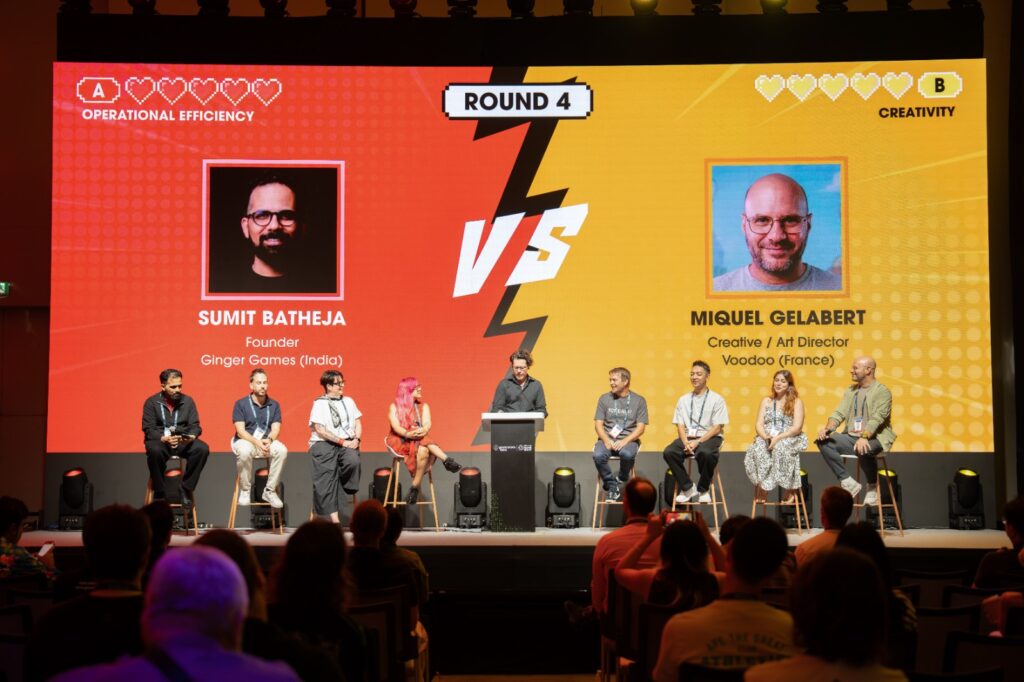
A live debate at the conference put this tension directly to the audience, asking whether efficiency or creativity should take priority in the AI era. The audience voted in favour of creativity.
The result does not suggest that efficiency is unimportant. Game development involves complex production pipelines, large teams, substantial budgets and demanding timelines. AI tools may help studios automate repetitive tasks, accelerate workflows and experiment with new approaches.
However, efficiency alone does not create a compelling game.
A distinctive world, memorable characters, an engaging narrative and an experience that players want to return to still depend on creative decisions. Technology can support these decisions, but the industry’s challenge is to ensure that the pursuit of faster production does not come at the cost of originality.
For younger professionals considering careers in gaming, this distinction is worth understanding. Technical proficiency and familiarity with AI tools will matter, but so will storytelling, design thinking, problem-solving and the ability to develop ideas that stand apart.
The debate at gamescom asia reflected a question that will likely remain central to the industry: how can developers use new technology without allowing the technology to define the creative limits of their work?
Southeast Asia wants a bigger role in global game development
Another important theme was the growing ambition of Southeast Asia’s gaming ecosystem.
A panel featuring representatives from Agate, Tencent and the Southeast Asian Games Showcase examined whether the region could become a stronger co-development destination for the global gaming industry.
Co-development allows studios in different markets to work together on parts of a game’s production. This can include art, animation, engineering, testing and other development functions. For emerging gaming markets, it can provide opportunities to participate in international projects, develop specialised capabilities and build relationships with established publishers and studios.
The opportunity is significant, but becoming a meaningful part of the global development ecosystem requires more than access to talent. Studios need reliable production capabilities, strong project management, creative expertise and the ability to deliver consistently against international expectations.
The conference also featured Gameloft discussing the development of the next generation of creative talent, while Rovio, gamigo and Abylight Studios shared perspectives on strategies for long-term launch success.
Together, these conversations highlighted the importance of building an ecosystem that can support both the creative and commercial sides of gaming.
For young people in Southeast Asia, this could translate into opportunities across game design, programming, animation, art, publishing, marketing, community management and production.
Independent studios continue to bring new ideas to the table
The conference’s Pitch Competition provided another window into the industry’s creative pipeline.
Thirteen finalists presented their games to a jury that included Lawrence Sher, Hollywood cinematographer and founder of ShotDeck. The competition recognised three projects across different categories.
MiMu Studio’s Little Old One and the Witch won Best Visual, NOTAI Games’ Slop Capital received Best Game Design, and Hypercent Inc.’s Backroom Cleaners won the audience-voted Most Anticipated Game award. Each winner received S$2,000.
The competition matters because independent studios often operate with fewer resources than established publishers. Platforms that give them opportunities to present their work, receive industry feedback and attract attention can help bring new ideas into a competitive market.
The categories also illustrate that a game can stand out in different ways. Visual identity, design and audience anticipation are distinct measures of creative potential, and all play a role in determining whether a project can attract interest.
For emerging developers, such opportunities can be an important part of building visibility and connecting with the wider industry.
The consumer experience remains central
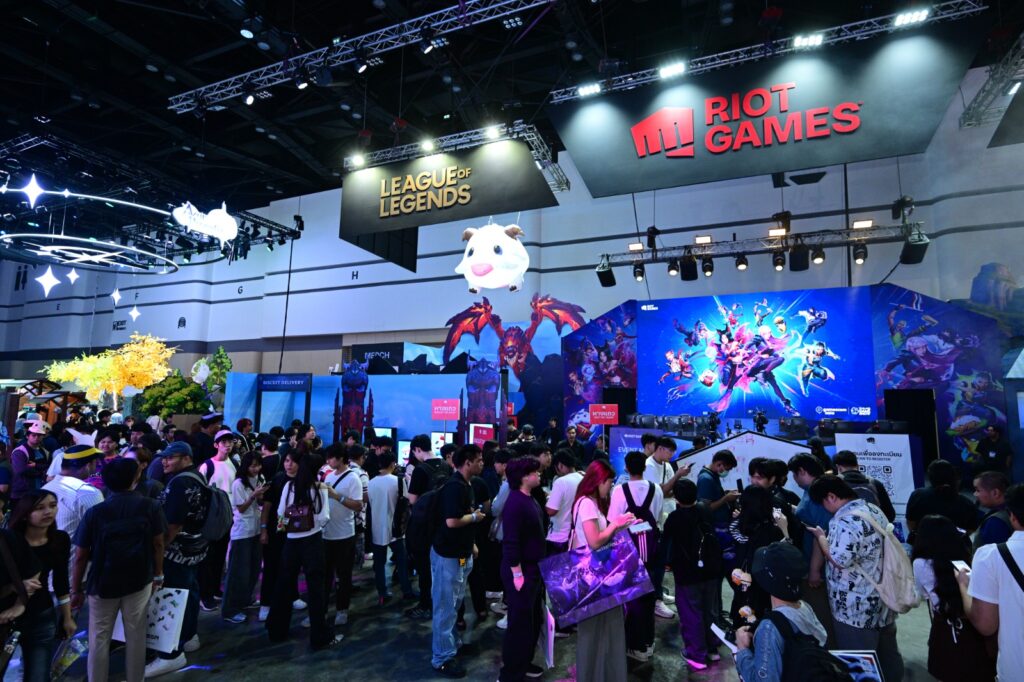
While the business programme explored the industry’s future, the entertainment area opened its doors to the public, bringing the discussion back to the players themselves.
Visitors could experience a range of upcoming and anticipated titles from major publishers and developers. CAPCOM showcased Monster Hunter Wilds: Ascendance, Pragmata, Onimusha: Way of the Sword and a Southeast Asian first playable demo of Mega Man: Dual Override.
Bandai Namco featured demos of Ace Combat 8: Wings of Theve and The Blood of Dawnwalker, alongside first looks at Dragon Ball Xenoverse 3 and Final Fantasy VII Revelation. SEGA ATLUS showcased Persona 4 Revival, STRANGER THAN HEAVEN and Total War: Warhammer 40,000.
A 270-square-metre Nintendo Switch 2 Try & Play zone, presented by Synnex | Nintendo, gave visitors an opportunity to experience the hardware, while AMD, Lenovo, SteelSeries and XPG presented gaming technology and accessories.
The entertainment programme also featured appearances from developers behind major titles, alongside activities from Riot Games centred on League of Legends and VALORANT.
These showcases are more than product demonstrations. They give publishers an opportunity to observe audience reactions, introduce new experiences and bring players closer to the people and teams behind the games.
The future of gaming will depend on more than technology
The second day of gamescom asia x Thailand Game Show 2026 brought together several questions that are likely to shape the industry’s next phase.
What do younger players expect from gaming platforms? How do studios build games that remain relevant for years? Can AI make development more efficient without weakening creativity? Can Southeast Asia become a more significant contributor to global game production? And how can independent studios turn promising ideas into commercially sustainable projects?
There are no simple answers. But the discussions point towards a gaming industry that is becoming more interconnected, with creativity, technology, communities, talent and business strategy increasingly influencing one another.
For young people entering the sector, this also means that gaming careers are no longer limited to becoming a game developer or professional player. The ecosystem spans design, storytelling, animation, engineering, publishing, marketing, esports, community building and business development.
Ultimately, the games that endure may not necessarily be those with the biggest launch budgets or the most advanced technology. They will be the ones that understand their players, offer distinctive experiences and have the creative and operational commitment to keep delivering value long after the initial excitement fades.
Editorial note: This feature is based on the conference and entertainment programme information shared by the event organisers. The observations about industry trends are editorial analysis, not independently verified audience research or interviews.