
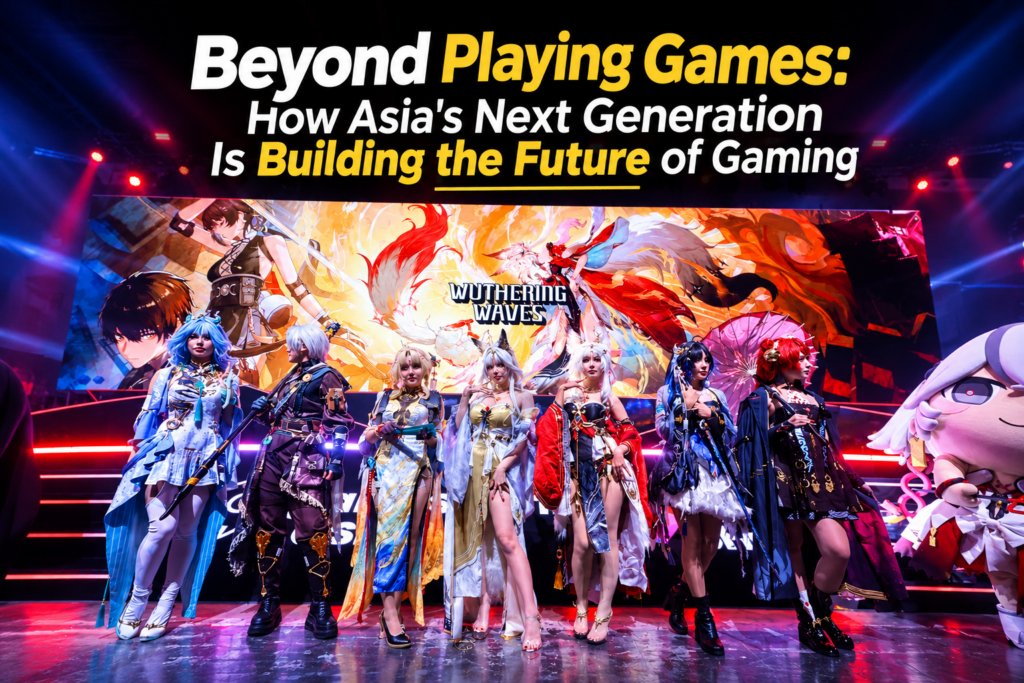
For a generation that has grown up playing video games, the relationship with gaming is beginning to evolve. Young people are no longer just engaging with games as players. Increasingly, they are exploring the possibilities of creating them, experimenting with technology, designing virtual worlds and bringing their own stories to interactive experiences.
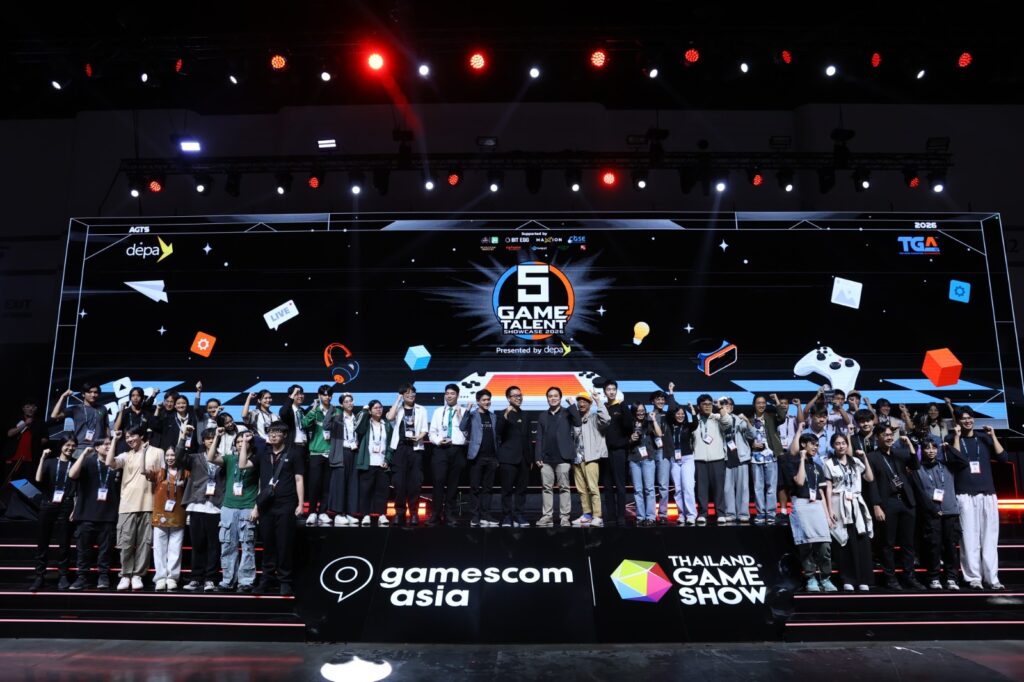
This shift from gaming as consumption to gaming as creation was visible at gamescom asia x Thailand Game Show 2026, where the Asia Game Talent Showcase brought together 20 student finalist teams from across Asia to present their projects to industry judges.
The showcase recognised emerging talent across seven categories, including game design, technology, narrative, visual art and audio. Team Xilosopher from Sripathum University received the Talent of the Year award for God Lies Above, while teams from institutions including Silpakorn University, Rangsit University, Chiang Mai University and Far Eastern University Institute of Technology were among the other winners.
Beyond the awards, the initiative offered an interesting glimpse into how the next generation is approaching gaming: not simply as an entertainment medium, but as a space where technology, creativity and storytelling intersect.
From Players to Creators: A Different Relationship with Gaming
Gaming has traditionally been discussed through the lens of players, audiences, esports competitions and content creators. However, the development of a video game involves an entirely different ecosystem of skills.
A compelling gaming experience requires more than programming. It brings together game mechanics, visual design, character development, sound, narrative construction and an understanding of how players interact with digital environments.
The diversity of categories at the Asia Game Talent Showcase reflects this multidisciplinary nature of game development.
While Best Technology recognised the technical capabilities behind a project, Best Narrative acknowledged the importance of storytelling. Best Visual Art and Best Audio highlighted the creative disciplines that contribute to building immersive experiences, while Best Game Design recognised the thinking that shapes how a game actually works.
For students exploring these disciplines, game development offers an opportunity to bring different interests together. Someone interested in illustration may find a role in visual world-building, while a computer science student may gravitate towards programming, artificial intelligence or game mechanics. Those interested in writing and storytelling can explore narrative design and character development.
It also broadens the conversation around careers in gaming. The industry is not exclusively about becoming a professional gamer or an esports personality. It encompasses a range of technical and creative capabilities that can contribute to the development of interactive entertainment.
Why Student Game Development Matters
One of the more interesting aspects of the showcase was its focus on student teams rather than established gaming studios.
The Rising Star Student award went to RE//SLASH, developed by Team SLASH’EM//ALL, with students representing Nawamintrachinuthit Triamudomsuksapattanakarn School, Ratwinit Bangkaeo School and Sarasas Witaed Samut Sakhon.
Other recognised projects included Fribbles by Team Whatcha Games from Silpakorn University, Swingscape by Team onlyonepen from Rangsit University, and CANDELA by Team CHOKOMINTO from Chiang Mai University.
These projects illustrate an important dimension of youth participation in gaming: the opportunity to experiment with ideas and translate them into working creative products.
Student-led development also creates an environment where different disciplines can come together. A team may need to divide responsibilities across coding, design, visual development, sound and storytelling, requiring participants to collaborate and solve problems beyond the boundaries of their individual academic specialisations.
Such experiences can help students understand how creative and technical ideas move from concept to execution.
However, the journey from a student project to a commercially successful game is a different challenge altogether. Development is only one part of the process. Publishing, distribution, marketing, financing, user acquisition and sustained player engagement are equally important considerations for anyone looking to build a gaming business.
This makes the distinction between developing a game and building a sustainable gaming enterprise particularly relevant for aspiring young creators.
Gaming Is Becoming a Broader Creative Ecosystem
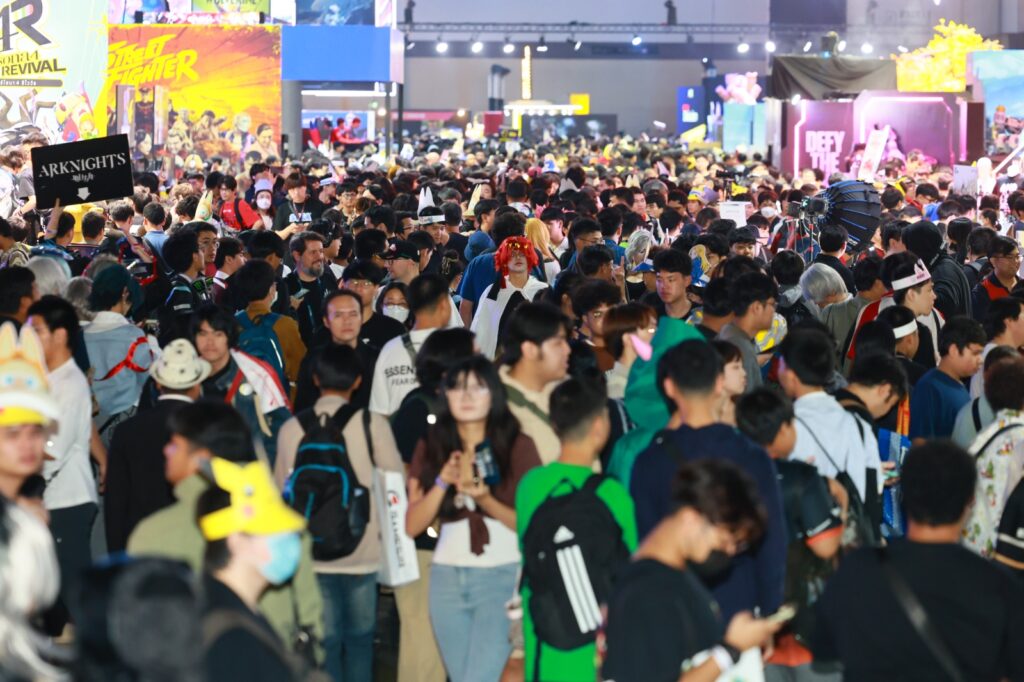
The student showcase was only one part of the larger gamescom asia x Thailand Game Show 2026 programme.
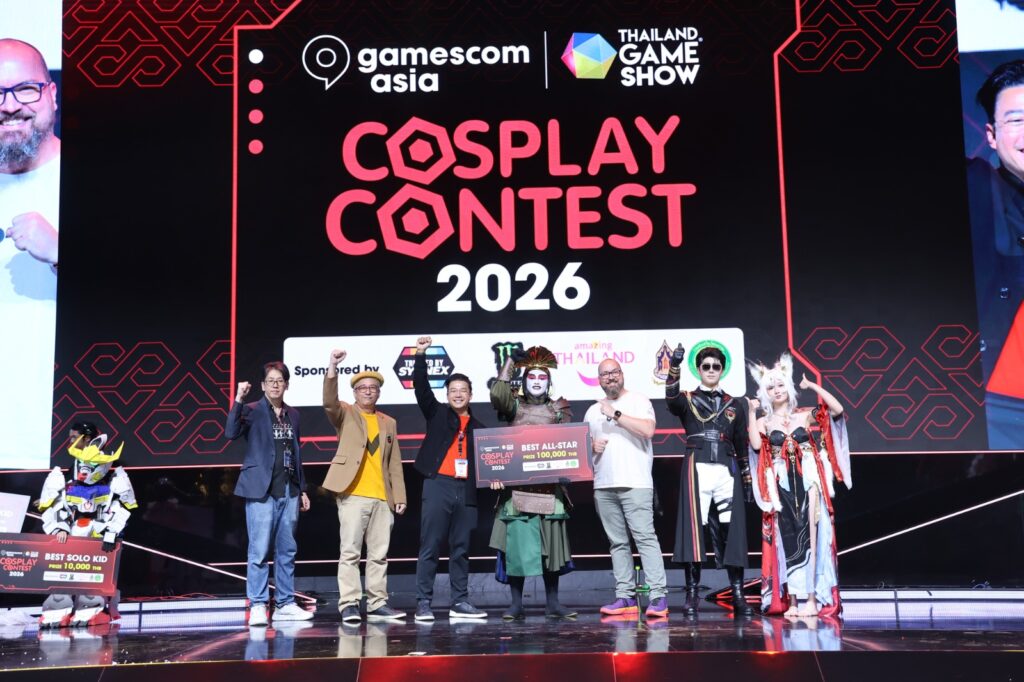
Across its entertainment area, the event brought together gaming demonstrations, creator appearances, cosplay competitions, anime-related programming and fan interactions.
CAPCOM’s Monster Hunter Wilds: Ascendance presentation, featuring producer Ryozo Tsujimoto, offered visitors a closer look at the game’s new Skybound Eyrie locale. Fans also had an opportunity to participate in a multiplayer hunt.
The Cosplay Contest 2026 introduced a new Best Duo category alongside its Solo, Team and All-Star formats, with contestants competing for a prize pool of approximately 300,000 baht. ACE Bangkok also made its debut, bringing together anime, film and collectibles, including a panel featuring producers associated with The Ghost in the Shell.
Creator appearances and fan engagements further illustrated how gaming conventions are expanding into spaces where different entertainment communities intersect.
For younger audiences, this creates a much wider relationship with gaming. They may discover a game through a creator, engage with its characters through cosplay, follow its storyline through online communities or eventually become interested in the process of developing something of their own.
Gaming, therefore, is not just an individual screen-based activity. It is also connected to communities, entertainment, creative expression and digital culture.
The Skills Behind the Next Generation of Games
As gaming experiences become increasingly sophisticated, the range of capabilities required to develop them is also evolving.
Game development brings together several disciplines that are increasingly relevant across the wider digital economy.
Programming and software engineering remain fundamental, but they operate alongside user experience design, animation, visual communication, sound engineering and creative writing. Emerging technologies, including artificial intelligence, also present new possibilities for developers to experiment with game environments, character interactions and production workflows.
For students, this creates opportunities to approach gaming through different educational and professional pathways.
A student studying computer science may explore game engines and programming. Someone pursuing design may contribute to character development or interface design. Those interested in filmmaking, literature or music may find opportunities in cinematic storytelling, narrative development and sound production.
The important point is that game development is an interdisciplinary pursuit. It requires people who can combine technical understanding with creative thinking and an appreciation of how audiences experience digital products.
This also makes student showcases valuable as spaces for young creators to present their ideas, receive recognition and engage with a broader gaming ecosystem.
From Student Projects to the Future of Gaming
The Asia Game Talent Showcase does not, by itself, establish how many of its participating students will eventually enter the gaming industry or turn their projects into commercial products. Nor does recognition at a competition automatically translate into a professional career.
But initiatives that give emerging creators a platform to present their work are an important part of the wider conversation about developing gaming talent.
For the next generation, the opportunity is to look beyond the experience of playing a game and understand the many decisions, disciplines and creative processes that make it possible.
For educational institutions and the gaming industry, the larger opportunity is to encourage young people to experiment, collaborate and develop the technical and creative capabilities needed to participate in this ecosystem.
The future of gaming will not be shaped by players alone. It will also depend on the developers who build new experiences, the designers who imagine new worlds, the storytellers who create memorable characters and the teams that bring all these elements together.
And if the student projects showcased at gamescom asia 2026 offer an early glimpse of this ambition, the next generation is already beginning to explore what that future could look like.