
From multiplayer games and esports to creators and online communities, young Indians are turning digital entertainment into a way to connect, compete and belong.
A young Indian watching a gaming livestream is not necessarily just watching someone play. They may be chatting with other viewers, following a creator they have known for years, sharing an inside joke or waiting for friends to join a multiplayer session.
The game might be on the screen, but the experience extends well beyond it.
The same is true of other forms of digital entertainment. A video can become the subject of a conversation in a college group. A creator’s livestream can bring together people with a shared interest. An esports tournament can give fans a team to support and a community to participate in. Even a popular meme can become a shorthand through which friends communicate.
For India’s Gen Z, digital entertainment can therefore serve two purposes: it provides something to watch or play, and it creates opportunities to interact with other people.
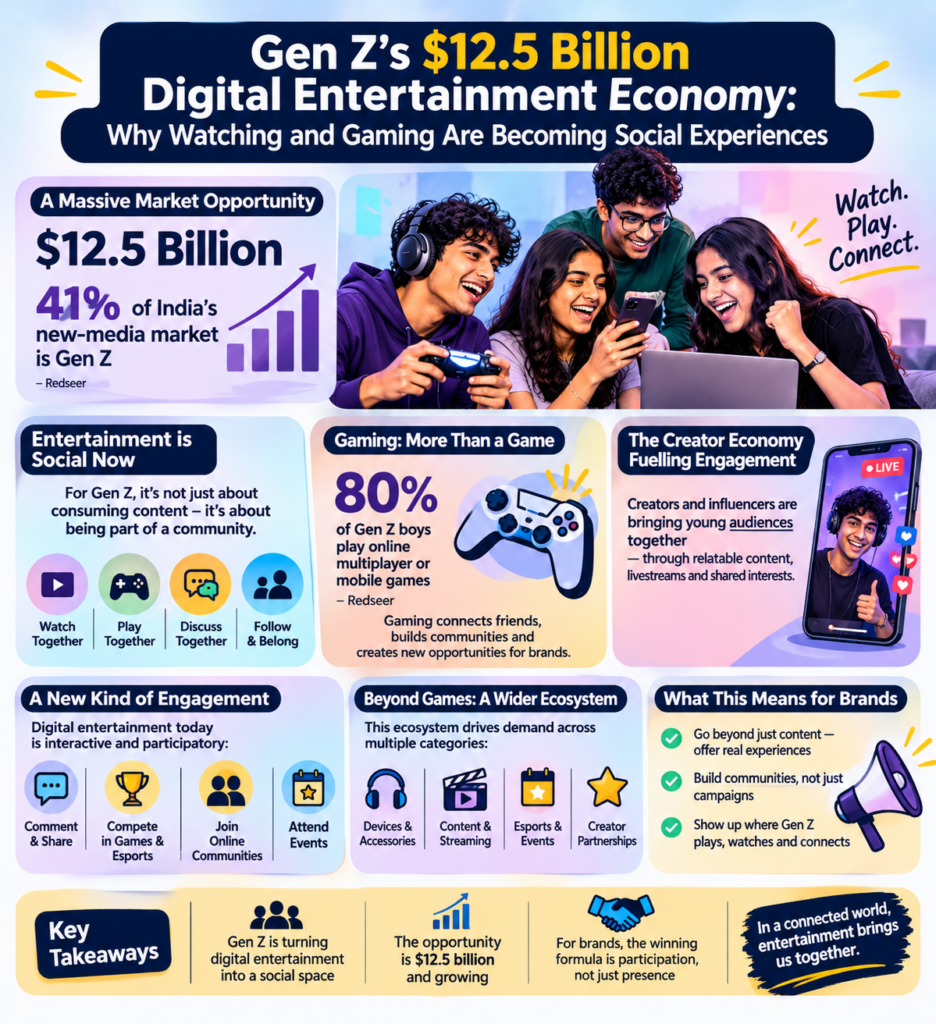
This social dimension matters as the country’s digital entertainment market expands. According to Redseer’s report, The Indian Consumer at 2030: Redefining Aspirations, Choices, and Markets, Gen Z accounts for an estimated $12.5 billion, or 41%, of India’s new-media market.
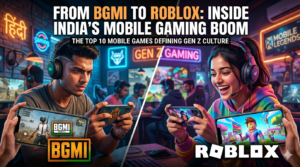
The report also highlights gaming’s role in community-building, with 80% of Gen Z boys reportedly playing online multiplayer or mobile games in the cited analysis.
These figures point towards an opportunity that extends beyond video games themselves. Devices, accessories, gaming content, esports, creator partnerships and shared entertainment experiences can all become part of the same ecosystem.
For brands, the challenge is to understand that young consumers may not simply want more content. They may also want experiences that help them participate, connect and feel part of something.
Entertainment is no longer just a one-way experience
Traditional entertainment was largely organised around a clear distinction: people watched a film, followed a television programme or listened to music, and conversations about it happened separately.
Digital platforms have made the relationship more interactive.
A viewer can react while a livestream is happening, post a response to a creator’s video, participate in a fandom or share a clip with friends seconds after watching it. Multiplayer games go a step further by allowing participants to play together in real time, whether they are in the same room or connecting from different cities.
The result is not that older forms of entertainment have disappeared. Films, television, music and other familiar formats remain important. Rather, digital platforms can add layers of participation around the content.
Watching becomes commenting. Following becomes interacting. Playing becomes collaborating or competing.
This changes how entertainment businesses might think about engagement. The number of views still matters, but it may not fully capture the strength of a community or the role a creator, game or platform plays in someone’s social life.
A person who watches a video once is different from someone who returns every week, recognises recurring participants and actively contributes to discussions. Both generate attention, but their relationships with the content are different.
For businesses, understanding that distinction can be valuable when designing experiences, evaluating partnerships and deciding where to invest.
Gaming: a game, a gathering place and a shared language
Gaming offers one of the clearest examples of entertainment becoming social.
In a multiplayer game, people do more than consume content. They make decisions together, coordinate actions, compete against other players and develop shared experiences. Friends may use gaming as a regular way to spend time together, while online communities can introduce players to people they would never have met offline.
For some, gaming is also a source of identity. Favourite titles, teams, creators and gaming styles can become part of how they express their interests.
Redseer’s reported finding that 80% of Gen Z boys in its cited analysis play online multiplayer or mobile games suggests the importance of this category within the studied group. It should not, however, be interpreted as meaning that 80% of all Indian Gen Z play games, or that boys and girls have identical gaming habits.
The wider opportunity is that gaming can connect several markets.
A player may use a smartphone, computer or console, depending on the game and their circumstances. They may buy headphones, controllers, keyboards, mice or other accessories. They may follow streamers, watch tournament coverage, join online communities or attend gaming events.
Not every player buys specialised equipment, pays for games or watches esports. Many participate through free-to-play mobile titles and devices they already own. But the ecosystem illustrates how one activity can create demand across hardware, accessories, content and experiences.
This also makes gaming a category that brands outside the traditional gaming industry may want to understand.
Technology companies can compete on device performance and usability. Consumer-electronics brands can explore accessories. Food and beverage businesses may find opportunities around tournaments and gaming gatherings. Education and technology platforms may connect with communities interested in digital skills and competitive play.
The important question is whether a brand has a meaningful role in the experience. A sponsorship logo alone may create visibility, but a useful product, well-designed event or credible partnership can provide a stronger reason for a community to engage.
The creator economy adds another layer
Gaming is only one part of the broader digital entertainment ecosystem. Creators have built audiences around comedy, music, commentary, lifestyle, sport, gaming and countless niche interests.
Their influence can extend beyond the content itself. A creator may establish a distinctive style of humour, develop recurring formats or create a community whose members share references and interests. Viewers may return not just for a particular video but because they enjoy the creator’s personality and the atmosphere around the content.
That can make creator-led entertainment feel more participatory than a conventional broadcast.
Live chats, comments, community posts, fan groups and audience-submitted ideas can all help people feel involved. Some audiences may also move between platforms, following a creator’s videos, livestreams and conversations across different channels.
For brands, this creates opportunities beyond paying for a single mention.
A technology company might collaborate with a gaming creator to demonstrate a product in a relevant setting. An esports organiser could work with creators to make a tournament more accessible to first-time viewers. A brand might support a community event that gives audiences a reason to participate rather than simply watch an advertisement.
But creator partnerships require judgement. A large audience does not automatically mean a strong fit with a brand, and a high view count does not necessarily translate into trust or action.
The relevant questions include whether the creator’s audience matches the intended consumers, whether the collaboration feels credible and whether the product genuinely belongs in the content.
In social entertainment, authenticity is not simply a tone of voice. It is a relationship between the creator, the audience and the brand’s role.
Esports turns participation into spectacle
Competitive gaming creates another bridge between playing and watching.
Esports allows audiences to follow players, teams, tournaments and rivalries. Fans can discuss results, analyse performance, celebrate wins and develop loyalties similar to those found in traditional sports fandom.
For viewers who do not play a particular game, competitive gaming can still provide entertainment. For active players, watching skilled competitors can also be a source of learning, inspiration or aspiration.
This creates different levels of participation: playing a game, following a creator, watching a tournament, discussing a team and attending an event. A person may move between several of these roles.
For organisers and brands, that opens up possibilities across tournament sponsorship, live events, streaming, merchandise and creator collaborations. It can also provide opportunities for local communities to gather around a shared interest.
However, esports should not be treated as a guaranteed mass-market opportunity simply because gaming is popular. Audiences vary by game, format and platform. Competitive titles can have very different communities, and interest in playing does not necessarily translate into interest in watching professional competitions.
Businesses need to understand the specific audience they want to reach rather than treating all gamers as one homogeneous group.
Devices and accessories are part of the experience
The social side of entertainment also has implications for consumer technology.
A device is not merely a screen or a collection of specifications. It can determine whether someone can join a game with friends, watch a livestream comfortably, communicate clearly or create content of their own.
For some users, a smartphone is enough. Others may care about battery life, display quality, connectivity, processing performance or storage. A player who communicates frequently may value a good microphone or headset. A creator may prioritise a camera, lighting or editing capabilities.
These needs are shaped by use cases and budgets. Not every young consumer wants a premium gaming laptop or expensive accessories, and many entertainment experiences remain accessible using existing devices.
That makes the market more diverse than a simple premium-hardware narrative suggests.
Brands have opportunities at different price points: entry-level devices, dependable accessories, products designed for specific activities and services that make entertainment easier to access. Clear explanations of what a product enables may be more useful than marketing that relies entirely on technical specifications.
The strongest proposition starts with the experience the consumer wants and works backwards to the technology required to support it.
The community may matter as much as the content
One of the most important implications of social entertainment is that people can become attached to the community surrounding a game, creator or platform.
A gaming group may have its own language and routines. A creator’s audience may develop recurring jokes and shared references. A fandom can become a place where people discuss a common interest and discover others who enjoy the same things.
These communities can provide connection, but they are not automatically positive or inclusive. Online spaces can also expose users to harassment, exclusion, misinformation and unhealthy behaviour. Moderation, privacy and safety therefore matter to the quality and sustainability of the experience.
For platforms and brands, community-building should involve more than attracting participants. It requires attention to how people interact, whether newcomers feel welcome and whether the environment is safe enough for people to keep returning.
Brands should also be careful not to mistake the existence of a large audience for permission to intrude. A community built around a shared passion is not necessarily waiting for commercial messages.
A partnership works best when it adds something relevant: access, useful tools, an event, an opportunity to participate or support for the community’s own interests.
The goal is not to turn every social space into an advertising channel. It is to earn a place in the experiences people already value.
What this means for brands
The Redseer figures provide a useful starting point for understanding Gen Z’s importance to India’s new-media economy. The strategic opportunity, however, lies in looking beyond the headline market size.
For brands, four questions deserve particular attention.
First, what kind of participation does the audience want? Watching, playing, competing, creating and socialising are different behaviours. A campaign designed for passive viewers may not work for an active gaming community.
Second, where does the community gather? Different games, creators and entertainment formats attract different audiences. A broad digital strategy should not assume that reach on one platform guarantees relevance elsewhere.
Third, what can the brand contribute? A product demonstration, tournament, creator collaboration or community event should offer something that makes sense within the entertainment experience.
Fourth, how will success be measured? Views and impressions remain useful, but businesses may also need to examine meaningful participation, audience response, product consideration and whether the collaboration strengthens the brand’s relevance over time.
These questions encourage brands to move from simply buying attention to understanding the relationships that sustain it.
They also help distinguish a short-lived campaign from a more durable connection with consumers.
The bigger picture
Redseer’s estimate that Gen Z accounts for $12.5 billion, or 41%, of India’s new-media market underlines the generation’s importance to digital entertainment. Its gaming findings add another dimension: entertainment can be an activity through which young people compete, collaborate and connect.
The opportunity extends across games, creators, esports, devices, accessories and live experiences. But the market is not one audience with one set of preferences. Some young Indians are dedicated gamers; others watch creators, follow esports, participate in fandoms or simply share entertaining content with friends.
For businesses, understanding these differences matters more than assuming that every young consumer wants the same platform, device or experience.
The most useful question is not only what Gen Z wants to watch or play. It is why they return, who they share the experience with and what makes them feel part of it.
Because in an increasingly connected entertainment economy, the content may bring people in.
The community may be what makes them stay.