
As younger professionals begin moving into supervisory and leadership roles, Indian companies face a larger question: are their workplaces ready to be led by a generation with different expectations of authority, communication and career growth?
For years, conversations about Gen Z in the workplace have largely focused on what this generation expects from employers: flexibility, meaningful work, faster learning, better communication and a healthier relationship with work. But an important shift is beginning to enter that conversation.
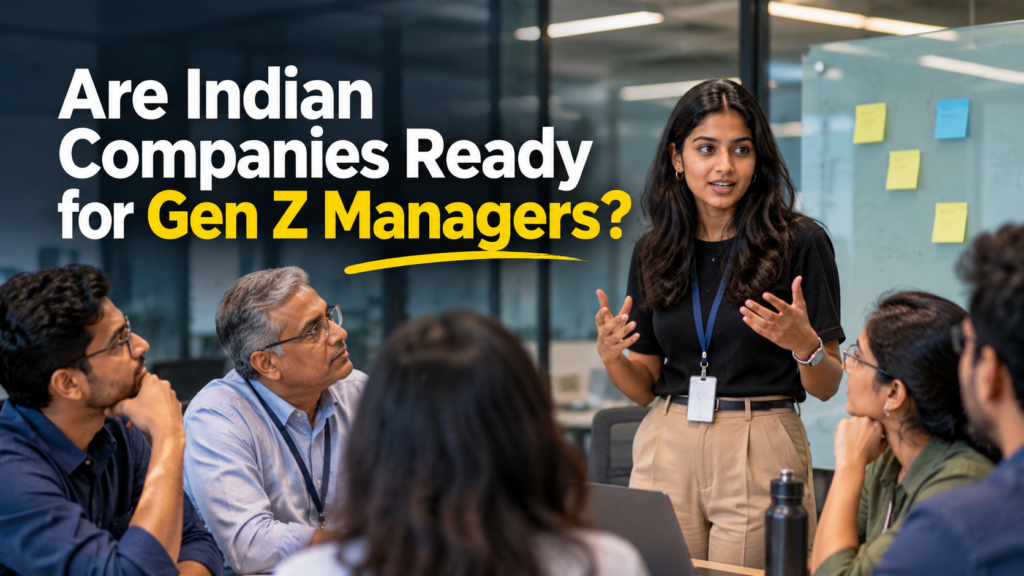
Gen Z is not going to remain the youngest generation in the room forever. As its members gain experience, some will begin managing teams, supervising projects and making decisions that affect colleagues, customers and businesses. The question is no longer only how companies should manage Gen Z employees. It is whether they are prepared to have Gen Z manage others.
The shift may be gradual, but it has implications for India’s corporate workplaces. A younger manager could find themselves leading colleagues who have spent more years in the organisation, handling teams with different working styles or being expected to deliver results without having accumulated decades of professional experience.
This is not necessarily a generational conflict waiting to happen. But it does require companies to think more carefully about how they identify, prepare and support their next generation of leaders.
The ambition to lead is there, but it comes with conditions
The assumption that Gen Z is uninterested in traditional leadership roles deserves a closer look.
Deloitte’s 2026 Gen Z and Millennial Survey, based on responses from 506 Gen Zs and 300 Millennials in India, found that 89% of Gen Z respondents were interested in pursuing supervisory or management roles. The proportion interested in senior leadership positions was even higher, at 96%.
Yet only 9% identified senior leadership as their primary career goal. Maintaining work-life balance and achieving financial independence remain important considerations in how young professionals think about their futures.
This suggests that leadership is not necessarily being rejected. Rather, young professionals may be evaluating it differently. They may want the opportunity to lead, influence decisions and take on greater responsibility, without automatically accepting the idea that career success must mean moving up a conventional corporate hierarchy.
For employers, this creates an opportunity. Leadership pathways need not be limited to promotions into increasingly senior positions. Project ownership, specialist leadership, mentoring responsibilities and cross-functional roles can also help younger professionals develop leadership capabilities.
The challenge is to create opportunities that provide genuine responsibility rather than simply adding a managerial title.
Being good at the job is not the same as managing people
One of the biggest mistakes organisations can make is assuming that a high-performing employee will automatically become a good manager.
A young professional may be technically strong, digitally confident and capable of delivering projects independently. But managing a team requires a different set of capabilities.
It involves setting expectations, resolving disagreements, giving difficult feedback, delegating responsibility, managing performance and recognising when a colleague needs support. It also requires judgement: knowing when to intervene, when to listen and when to allow someone else to find a solution.
These capabilities are developed through experience, observation and practice. They cannot be acquired simply by being promoted.
Deloitte’s 2025 India survey offers an interesting insight into the development expectations of younger professionals. It found that 94% of Gen Z respondents considered on-the-job learning and practical experience helpful for career growth, while 91% valued mentorship and guidance from experienced colleagues.
The same survey identified a gap between what young employees expect from managers and what they experience. While 62% of Indian Gen Z respondents wanted more guidance and support from their managers, only 44% felt they received it.
The findings point to an important question for employers: if organisations expect young professionals to become effective managers, are they giving them the mentorship and practical opportunities needed to learn how to lead?
The development of future managers cannot begin on the day someone receives a promotion.
Managing colleagues older and more experienced
A particularly interesting challenge for younger managers in India could be managing colleagues who are older, have longer professional experience or have spent more time in the organisation.
In workplaces where seniority and years of experience have traditionally carried considerable weight, a younger manager may need to establish credibility without relying on age or tenure.
This can become difficult when a manager is responsible for evaluating the performance of someone who has been doing the job for longer, or when an experienced colleague questions a decision made by a relatively new leader.
However, this challenge is not exclusive to Gen Z. Managers across generations have had to lead teams with different levels of experience. What matters is whether organisations provide clear role definitions, decision-making authority and a culture in which professional respect is not determined solely by age.
Younger managers will need to learn that leadership is not about demonstrating that they know more than everyone else. It is about creating conditions in which the team can perform better.
For their part, organisations must ensure that experienced employees understand and respect managerial responsibilities, regardless of the manager’s age.
The most effective workplaces will be those where experience and new perspectives complement each other rather than compete.
The communication challenge
Gen Z has grown up in a world of instant messaging, digital collaboration and rapid access to information. These experiences can influence how younger professionals communicate, share feedback and expect decisions to be made.
But digital fluency should not be confused with leadership readiness.
Managing a team involves conversations that cannot always be handled through a message or a project-management platform. It requires the ability to communicate expectations clearly, address underperformance, manage disagreements and have uncomfortable conversations with empathy.
A manager must also recognise that different employees may need different forms of communication and support. Some may prefer regular feedback; others may value greater independence. Some may be comfortable with digital communication, while others may prefer face-to-face conversations.
This is where emotional intelligence becomes particularly important.
Deloitte’s 2025 survey found that 92% of Indian Gen Z respondents considered soft skills—including communication, leadership, empathy and networking—important for career advancement. The figure suggests that young professionals themselves recognise that technical competence alone will not be sufficient.
For companies, the implication is clear: leadership development must include people-management skills, not just functional expertise or technical training.
AI fluency could be an advantage, but it is not a substitute for judgement
Gen Z is entering management at a time when artificial intelligence is changing how teams work, make decisions and deliver projects.
Younger professionals may be more comfortable experimenting with AI tools, automating repetitive tasks and adopting new digital workflows. This can be an advantage for organisations trying to improve productivity and rethink established processes.
But effective managers must do more than introduce new tools. They need to understand where technology adds value, evaluate the quality of its outputs, consider risks and help teams adapt to changing responsibilities.
AI can assist with research, analysis and routine communication. It cannot independently take responsibility for a difficult performance conversation, understand every team member’s circumstances or make an ethical decision on behalf of an organisation.
The next generation of managers will therefore need to combine technological confidence with human judgement.
This also places a responsibility on employers to ensure that younger leaders understand the business, regulatory and people-related implications of the technologies they introduce.
Are companies preparing managers for the role?
There is a broader organisational challenge here. Many companies invest in hiring young talent and providing technical training, but the transition from individual contributor to people manager can receive less structured attention.
Gallup’s 2025 findings on Indian workplaces underline why this matters. Manager engagement in India fell from 39% in 2024 to 30% in 2025. Managers play a critical role in translating organisational priorities into everyday work, supporting employees and maintaining team engagement. When managers themselves are struggling, the consequences can extend to the people they lead.
The challenge, therefore, is not simply to make Gen Z managers more capable. It is to make management a role that people across generations can perform effectively.
Companies could begin by creating structured first-time manager programmes, offering access to experienced mentors, providing opportunities to lead smaller projects before taking on full teams and training managers in feedback, conflict resolution and performance conversations.
They should also give new managers enough authority to make decisions, while ensuring that senior leaders remain available when difficult situations arise.
Importantly, organisations should not assume that every high-performing young employee wants to manage people. Some may prefer to build deep expertise as individual contributors. A healthy career structure should recognise both forms of progression.
The next leadership transition
India’s workplaces are likely to become increasingly multi-generational, with younger professionals taking on responsibilities that were traditionally associated with longer experience.
This need not be a disruption. It could be an opportunity to build more collaborative, adaptive and technologically aware organisations.
But that outcome will not happen simply because a younger generation enters management. Gen Z managers will need to develop patience, judgement, accountability and the ability to work with people whose experiences differ from their own. Employers, meanwhile, will need to move beyond assumptions about age and provide the training, authority and support required to make the transition successful.
The real test of whether Indian companies are ready for Gen Z managers will not be how quickly they promote younger employees. It will be whether they can help those employees become leaders whom people trust, respect and want to work with.
The future of leadership will not be determined by the age of the person in charge. It will be determined by their ability to bring people together and help them do better work.