
From Korean Bingsu and Kunafa to customised ice creams and visually striking dessert bowls, a new generation of dessert brands is turning sweet treats into social experiences. What is driving India’s evolving dessert culture, and why are brands paying attention?
For a growing number of young consumers, meeting friends does not always require a restaurant reservation, a movie ticket or a night out. Sometimes, it can begin with a simple question: Have you tried that new dessert place?
A Korean Bingsu topped with fruit, a Kunafa creation layered with pistachio, a customised ice cream bowl or a visually elaborate cheesecake can become the reason for an outing. The dessert is only part of the attraction. The experience of choosing it, watching it being prepared, sharing it with friends and posting it online can be equally important.
This is the opportunity that a new generation of dessert brands is beginning to explore. In India, brands such as Snowberry are building their propositions around more than conventional ice cream or traditional sweet offerings. They are introducing global dessert formats, customisation and presentation-led experiences that make the visit itself part of the product.
The shift raises an interesting question for the food and beverage industry: Is dessert becoming a new kind of social destination for India’s Gen Z?
The answer is not that dessert cafés are replacing restaurants, pubs or conventional hangouts. Rather, they may be expanding the occasions on which young consumers choose to go out, meet friends and spend money.
When dessert becomes the reason to go out
Traditionally, dessert occupied a fairly defined place in the Indian eating experience. It followed a meal, accompanied a celebration or arrived as an occasional indulgence. Ice cream parlours and sweet shops were familiar destinations, but the decision to visit them was often driven by a craving or a family occasion.
That relationship is changing.
Dessert-focused outlets are increasingly positioning themselves as standalone destinations. Consumers can now plan an outing around a dessert rather than treat it as an addition to lunch or dinner. A visit might involve trying a new flavour, comparing different combinations, taking photographs or simply spending time with friends.
A January 2026 report by Restaurant India described dessert-only formats, including bakeries, ice-cream parlours and sweet-focused cafés, as one of the faster-growing segments of organised food services. It cited estimated growth of 14–16%, although the segment still represented a relatively small share of the overall market.
The report also noted that dessert consumption is spreading beyond the traditional after-meal occasion, with demand appearing at different times of the day, including late-night indulgence and post-work treats.
This matters because it changes the commercial role of a dessert outlet. It is no longer competing only with another ice cream parlour or bakery. It is competing for a consumer’s leisure time.
Snowberry: Building a destination around dessert
One Indian brand that offers an interesting lens into this shift is Snowberry.
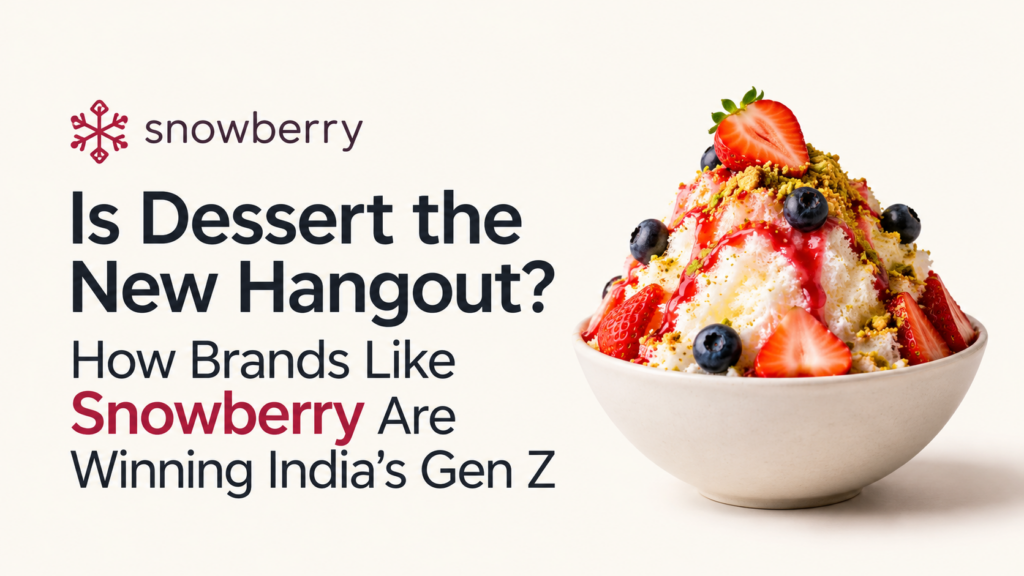
The brand describes itself as an artisanal dessert destination built around customisable creations, premium ingredients and visually engaging presentations. Its proposition includes formats such as Korean-style Bingsu, real-fruit ice creams, Acai bowls, Kunafa cake, Biscoff cheesecake and other contemporary dessert offerings.
Its menu reflects a wider change in how global food influences are reaching Indian consumers. Products that once felt unfamiliar or specialised are increasingly appearing in accessible, contemporary formats.
Consider the appeal of Bingsu. The Korean shaved-ice dessert offers a different texture and presentation from conventional ice cream. Add fruit, sauces or Kunafa-inspired toppings, and the product becomes something consumers may want to explore, photograph and discuss.
Similarly, a customised dessert gives customers a degree of participation. They are not simply selecting an item from a menu; they can engage with the combinations and presentation.
Snowberry’s own brand communication describes its outlets as immersive dessert experiences, with customisation and visual appeal forming part of its identity. That is a useful example of how a dessert business can position itself around an occasion rather than just a product.
However, there is an important distinction: the brand does not publicly establish what proportion of its customers are Gen Z. Snowberry is therefore best understood here as an Indian case study of experience-led dessert retail, rather than proof that the entire customer base is youth-driven.
Gen Z is looking for more than familiar flavours
There is a larger consumer trend behind the emergence of these formats.
Research published by Mintel in March 2026 identifies Indians aged 28 and under as the country’s most dessert-engaged cohort. The research highlights the importance of novelty, authenticity and visual appeal in shaping younger consumers’ dessert choices.
It also points to the influence of social-media-led discovery and growing café culture.
The flavour trends are particularly revealing. Matcha, Kunafa and Dubai chocolate have gained visibility in conversations around Indian desserts. Mintel found that 22% of Indian Gen Z respondents were willing to pay more for matcha-flavoured desserts, while 19% were willing to pay more for Middle Eastern-inspired options such as Dubai chocolate and Kunafa.
These numbers do not mean every young consumer is buying premium desserts. They do, however, indicate an appetite among a segment of Gen Z for unfamiliar flavours and distinctive formats.
For brands, the opportunity lies in translating global food trends into products that feel exciting but remain accessible to Indian tastes.
A matcha dessert, for instance, can be paired with chocolate or fruit. Kunafa can be adapted into cakes, cheesecakes and ice cream toppings. Familiar ingredients can be presented in formats that feel new.
This is not simply a movement towards international food. It is a willingness to experiment with how familiar and unfamiliar flavours come together.
Instagram has changed how a dessert is discovered
The relationship between food and social media is central to this evolution.
A consumer might first encounter a dessert through an Instagram Reel, a creator’s review, a friend’s Story or a photograph shared in a group chat. The visual presentation creates curiosity. The location becomes identifiable. The product becomes something to try.
In this environment, the experience begins before the customer enters the outlet.
A visually distinctive dessert has an advantage because it can travel beyond the store through photographs and short videos. Layers, textures, colours, toppings and preparation techniques give creators and customers something to capture.
Restaurant India, in its January 2026 coverage of India’s dessert market, quoted industry operators describing how products designed around texture and experience can resonate strongly because they translate instantly on screen. It also highlighted an important limitation: visual appeal may encourage trial, but taste and consistency determine whether customers return.
That distinction is particularly important for brands.
A viral dessert can generate curiosity and an initial rush. But if the product disappoints, the outlet is unlikely to convert that attention into sustained demand.
Social media can create discovery. It cannot guarantee loyalty.
The new social occasion: A place to meet, not just eat
The more interesting question is whether dessert outlets are becoming alternative social spaces.
For young consumers, a hangout does not necessarily need to involve a full meal or a formal evening plan. It could be a quick visit after college, a post-work catch-up, a weekend outing or an informal meeting with friends.
A dessert café can fit into these occasions because the format is relatively flexible. Friends can meet for a short visit, order something to share or explore different options without committing to a full restaurant experience.
It also gives the group a common activity. Deciding what to order, trying one another’s choices and discovering a new flavour can become part of the social experience.
This is where the comparison with the international trend of frozen-yogurt shops becoming social destinations becomes relevant. In some markets, dessert outlets are being discussed as places where younger consumers gather, in a way that goes beyond the product being sold.
India’s context is different. The country’s social habits, spending patterns and relationship with nightlife cannot simply be compared with those of the United States. There is also no evidence yet that dessert destinations are replacing bars or other established social venues for Indian Gen Z.
But the broader proposition is worth examining: young consumers may be adding new types of places to their social routines.
The next popular hangout may not always be a café serving coffee or a restaurant serving dinner. It could be a specialist dessert destination.
Is it affordable socialising?
Affordability will determine how frequently this behaviour can become a habit.
Gen Z is not a single consumer group with identical spending power. A college student managing a limited monthly budget may approach a premium dessert outlet very differently from a young professional with a regular income.
For some, a customised dessert or a premium ice cream may be an occasional indulgence. For others, it could become a regular weekend activity.
This creates an interesting balancing act for dessert brands. They need to offer products that feel distinctive enough to justify a visit, while keeping prices within reach of the consumers they want to attract.
The Indian dessert market also retains a strong connection with familiar and traditional offerings. A modern dessert experience does not automatically make traditional sweets irrelevant. Instead, consumers may move between local mithai shops, neighbourhood bakeries, established ice cream brands and newer specialist outlets depending on the occasion.
Food Safety Works’ 2025 survey on Indian dessert consumption found that traditional Indian desserts remained the leading preference in its sample, while baked desserts and contemporary options also attracted interest. The study identified taste and self-reward as important motivations for dessert consumption.
The lesson for brands is that novelty must coexist with familiarity. A product can be visually exciting, but it still needs to taste good and feel worth the money.
What dessert brands are really selling
For the food and beverage industry, the rise of experience-led dessert formats presents a larger strategic opportunity.
A conventional product-led approach asks how a brand can persuade consumers to buy another ice cream, cake or sweet.
An experience-led approach asks a different question: how can the brand become the place consumers choose when they want to spend time with friends?
That changes several aspects of the business.
The menu needs products that encourage discovery and repeat visits. The store needs to offer an environment in which customers feel comfortable spending time. Presentation needs to create a recognisable identity. Pricing must support both trial and repeat consumption.
Brands also need to understand the difference between a first-time visitor and a returning customer. A product that goes viral may generate a spike in footfall, but sustainable growth depends on service, quality, consistency and value.
Mintel’s 2026 research identifies another opportunity: fewer than 1% of Indian dessert launches between 2022 and 2025 were positioned as limited editions or co-branded products. For brands targeting younger consumers, this suggests room for seasonal launches, collaborations and limited-time experiences that give customers a reason to return.
The challenge is to avoid innovation for its own sake. A new flavour or collaboration may attract attention, but it must make sense for the brand and its audience.
Beyond the sweet treat
The emergence of brands such as Snowberry points towards a wider evolution in India’s food culture. Consumers are not necessarily abandoning familiar eating habits. They are adding new experiences to them.
For Gen Z, food discovery can be entertainment, social currency, personal expression and a reason to meet friends. A dessert can become a conversation starter. A shop can become a destination. An outing can be built around something that, until recently, was often treated as an afterthought to a meal.
But the real test for this category will not be how many people photograph a dessert or how quickly a new flavour trends online. It will be whether consumers return after the novelty fades.
For dessert brands, that means building more than an Instagram-worthy product. It means creating an experience that delivers on taste, price, service and atmosphere.
Perhaps dessert is not the new bar. But for a generation constantly discovering new ways to spend time together, it may be becoming another reason to step out.