

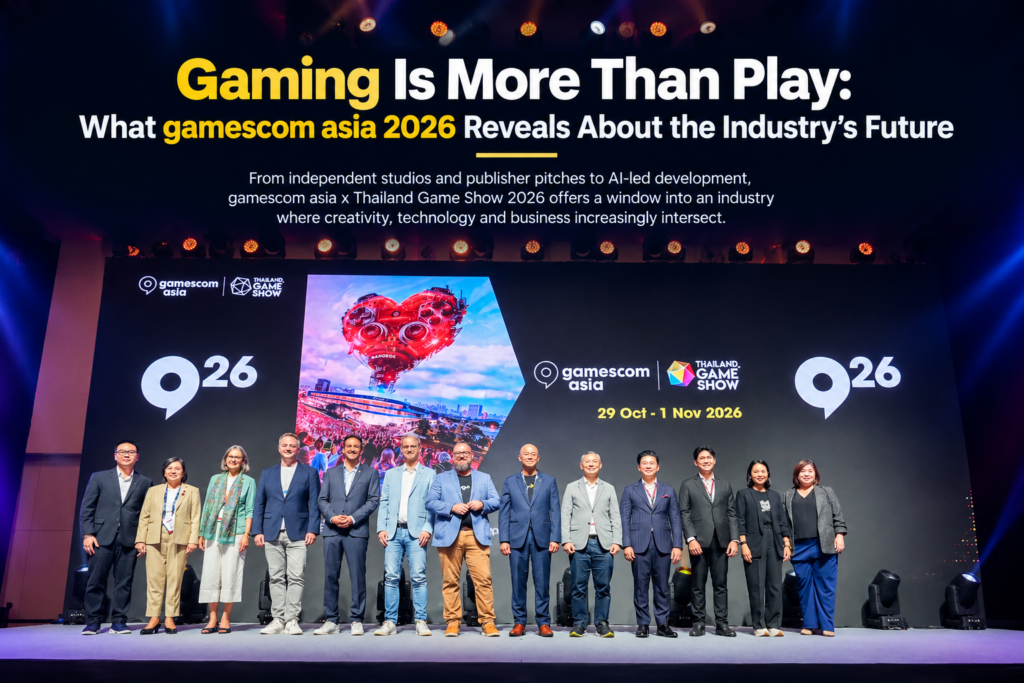
From independent game studios and publisher pitches to AI-led development and global investment, gamescom asia x Thailand Game Show 2026 offers a window into an industry where creativity, technology and business increasingly intersect.
Gaming is often discussed through the games people play, the consoles they buy and the communities they build online. But behind every successful title lies a more complex industry: developers trying to turn original ideas into products, publishers deciding what deserves investment, studios competing for attention and technology companies reshaping how games are made.
That business is increasingly visible in Asia.
On October 29, gamescom asia x Thailand Game Show 2026 opened its business programme at Bangkok’s Queen Sirikit National Convention Center, bringing together gaming professionals, studios, publishers, investors and government delegations from 29 countries and regions. The event’s organisers announced a record international presence, including 20 national pavilions representing 12 markets.
The scale matters, but the programme offers a more revealing story. From a keynote by legendary game creator John Romero to sessions on independent intellectual property, artificial intelligence and publishing, the event illustrates how gaming has evolved into an ecosystem that extends well beyond the act of playing.
For young people interested in technology, design, storytelling or entrepreneurship, this is an industry worth understanding.
1. Original ideas remain gaming’s most valuable currency
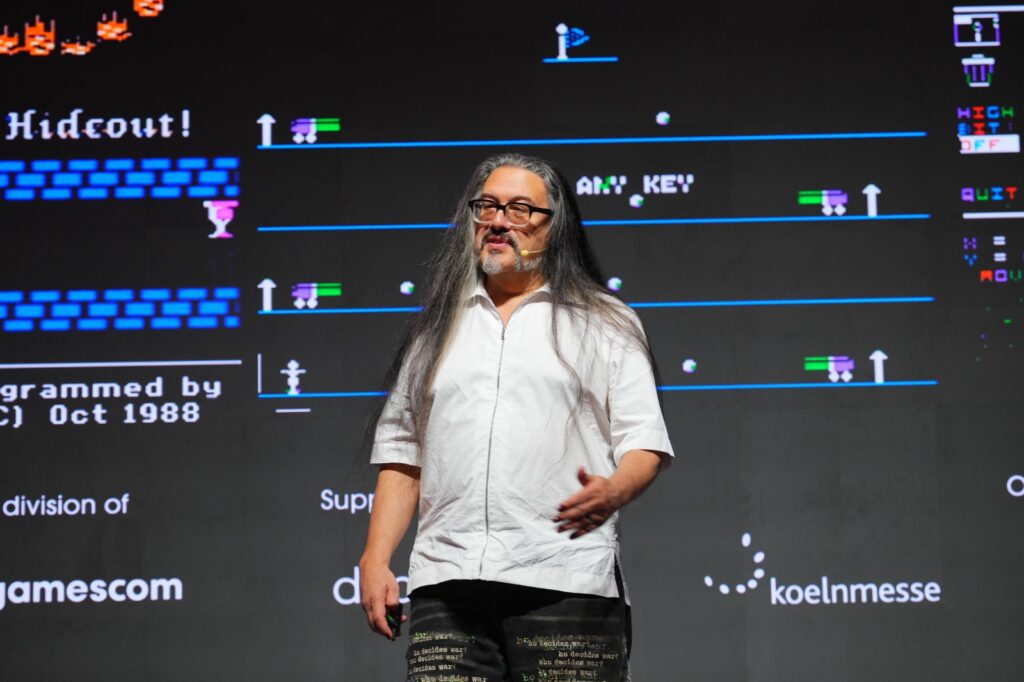
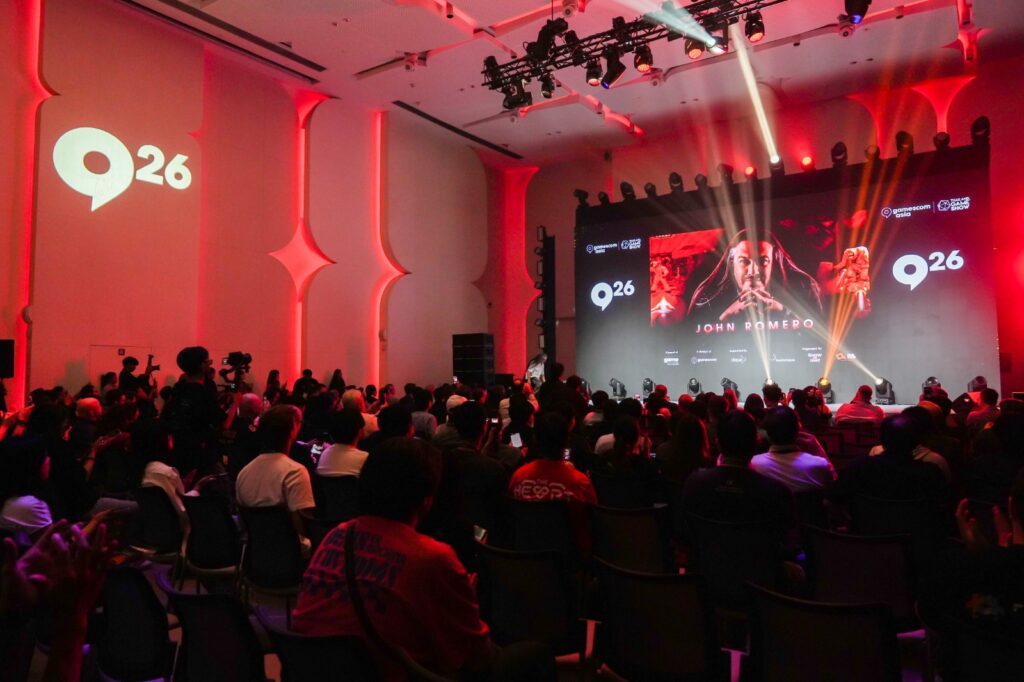
One of the opening day’s headline sessions featured John Romero, co-creator of DOOM and Quake, speaking on Why We Still Make Games. Reflecting on more than four decades in the industry, Romero emphasised the importance of new ideas and the experimentation taking place in independent games.
His message points to a persistent tension in gaming: while established franchises offer familiarity and commercial recognition, the industry also depends on creators willing to experiment with unfamiliar concepts.
The distinction is important. A game is not simply a piece of software. It can combine visual design, music, writing, character development, world-building, technology and community into a single intellectual property.
When that combination works, the opportunity can extend beyond an individual release. Characters, stories and fictional worlds can support sequels, merchandise, adaptations and communities that remain invested long after launch.
Independent studios are particularly interesting in this context. They may not have the budgets or distribution advantages of the largest publishers, but smaller teams can experiment with unconventional mechanics, distinctive visual styles and narrative formats.
The commercial outcome is never guaranteed. Originality alone does not ensure an audience, and independent developers face substantial challenges around financing, marketing and discoverability. Yet experimentation remains one of the ways new franchises emerge.
For aspiring creators, the lesson is not that every new idea will succeed. It is that technical proficiency and creative differentiation need to work together.
2. The business of gaming begins before a game launches
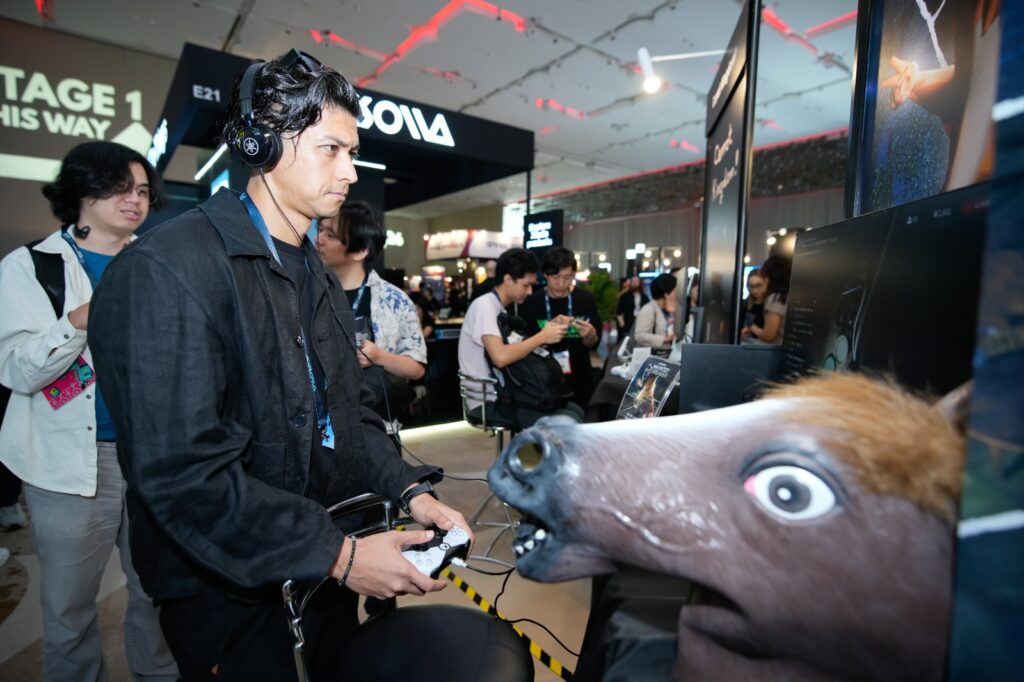
The event’s business programme also highlighted a less visible part of the industry: the relationship between developers and the companies that finance, publish and distribute their work.
One of the day’s sessions, the Reverse Pitch, featured publishers including PlaySide, Focus Entertainment, Fireshine Games and Team17 presenting directly to developers what they want to fund next.
The format reverses the familiar dynamic in which a studio pitches its game to a potential publisher. Instead, developers get an opportunity to understand what publishing partners are seeking.
This matters because building a game and building a sustainable gaming business are different challenges.
A developer may have a compelling concept and the skills to execute it, but still need funding, production support, quality assurance, localisation, distribution and marketing. A publishing partner can potentially help provide some of these capabilities, although the terms and creative control involved vary considerably between agreements.
The pitch format also makes clear that investment is not simply a reward for having a good idea. Publishers must consider whether a concept fits their portfolio, whether the team can deliver it, what audience it might attract and whether the economics make sense.
For younger developers, learning how this process works can be as important as learning to code.
It also opens up a broader range of career possibilities. Gaming businesses need professionals in production, publishing, business development, marketing, community management, research, finance and partnerships, alongside programmers and artists.
The industry is therefore relevant not only to those who want to build games, but also to those interested in helping creative products reach an audience.
3. Gaming’s intellectual property is becoming a long-term proposition
The opening-day programme placed considerable emphasis on how established and emerging intellectual property can be developed over time.
AdHoc Studio’s co-founders Nick Herman and Dennis Lenart discussed Dispatch and the interactive narrative genre. Ubisoft’s creative leads examined the process of reimagining Assassin’s Creed Black Flag and Rayman Legends for a new generation, while Massive Monster’s Jojo Zhou discussed how the world of Cult of the Lamb has evolved through post-launch updates.
These sessions approach intellectual property from different directions: new storytelling formats, established franchises and continued development after a game’s initial release.
Together, they highlight a fundamental feature of the business. Launching a game is not necessarily the end of the relationship between its creators and players.
Updates can introduce new content, refine the experience and give existing communities reasons to return. Established franchises can also reach new audiences through remakes or reimagined releases.
Narrative-driven games offer another opportunity. Their characters, settings and story structures can create deeper engagement than a single play session, particularly when players become invested in the fictional world.
However, maintaining intellectual property requires more than extending a product’s life indefinitely. Developers must balance commercial objectives with quality, creative direction and player expectations.
The broader point is that gaming combines the economics of software with the possibilities of entertainment franchises. Understanding that combination is essential to understanding why publishers and investors pay attention to a game’s potential beyond its initial release.
4. Artificial intelligence is entering the development conversation
Artificial intelligence was another subject on the opening-day agenda, with Voodoo examining how AI is already changing game development.
Its significance extends beyond the prospect of generating artwork or speeding up individual tasks. AI tools could affect multiple stages of a game’s production, including prototyping, testing, asset workflows and the development of interactive experiences.
For small teams, tools that reduce repetitive work may help make certain projects more feasible. Developers could potentially test ideas faster or devote more time to aspects of design that require human judgement.
But the implications are not uniformly positive.
Questions remain around intellectual property, the provenance of training data, consistency of output, quality control and the effect of automation on particular creative roles. Using an AI tool also does not eliminate the need for people who understand game mechanics, player behaviour, storytelling and production constraints.
The practical question for aspiring developers is therefore not simply whether AI will create games. It is how developers will use these tools, where human judgement remains essential and which new skills become valuable.
For people entering the industry, a combination of technical capability, creative thinking and familiarity with emerging tools may prove more useful than treating AI as either a complete replacement for developers or a passing trend.
The event’s inclusion of AI in a broader programme covering creativity, publishing and intellectual property reflects how these conversations increasingly overlap.
5. Asia’s gaming ecosystem is connecting creativity with global business
The international composition of gamescom asia x Thailand Game Show is another significant part of the story.
The 2026 business programme brought together exhibitors from 29 countries and regions, with 20 national pavilions representing 12 markets. Its Invest Circle and VIP XPerience, sponsored by Xsolla, were designed to facilitate networking between studios, publishers and investors.
The event also included an Asia Game Talent Showcase, highlighting student teams and their games.
These formats create opportunities for different parts of the ecosystem to encounter one another. Developers can learn about publishing requirements, investors can discover studios, and emerging teams can present their work in an industry setting.
Such interactions do not automatically translate into funding or commercial partnerships. Their value depends on the quality of the projects, the relevance of the connections and what happens after the event.
Nevertheless, international industry platforms can help studios understand markets beyond their home countries and identify potential partners for distribution, localisation and development.
For Asia, the opportunity is not limited to producing games for regional audiences. Studios can also develop intellectual property with international appeal, while learning from global publishing practices and adapting them to local creative contexts.
The presence of student developers is especially relevant. A talent showcase places emerging creators within the same broader conversation as established companies, even if the commercial realities they face are very different.
It provides a reminder that the future of the industry depends not only on large publishers and recognisable franchises, but also on the next generation of teams developing ideas that have yet to find an audience.
6. What this means for young people entering gaming
The most useful takeaway from the event is that gaming should not be viewed as a single career category.
A person interested in coding might pursue gameplay programming, engineering or tools development. Someone with a background in art could explore character design, animation or environment creation. Those drawn to storytelling may find opportunities in narrative design, writing and interactive experiences.
Others may be better suited to production, marketing, community building, publishing or commercial partnerships.
These pathways require different skills and levels of technical knowledge. They also differ in their entry requirements, employment prospects and earning potential. The event alone does not establish how many jobs will be created or which roles will grow fastest.
What it does illustrate is the breadth of capabilities involved in taking a game from concept to market.
For students, this suggests a practical starting point: build a small project, join a development team, participate in a game jam, learn a production tool or document a prototype. A finished project can demonstrate an ability to collaborate, solve problems and turn an idea into something playable.
Aspiring entrepreneurs can go further by studying publishing agreements, business models, player acquisition and the costs of maintaining a game after launch.
In an industry where creative ambition and commercial execution must coexist, understanding both sides can be a meaningful advantage.
Beyond the screen
gamescom asia x Thailand Game Show 2026 brings together several forces shaping the gaming industry: the continuing importance of original ideas, the business of intellectual property, the search for new projects to fund, the adoption of AI tools and the development of international connections.
None of these developments guarantees success for a new studio or a young creator. Gaming remains a competitive business, and a promising concept must still find an audience and a viable path to market.
But the industry offers a useful case study in how technology, creativity and commerce can combine to create products with global reach.
For young people, gaming can be more than a pastime. It can be a field in which they build technical skills, tell stories, create intellectual property, form businesses and collaborate across borders.
The next generation of gaming may be shaped by the people who play games today. Increasingly, it will also be shaped by those who decide to build them.
Editorial note: This feature is based on the event information and programme announced by the organisers. It is not based on independent interviews with speakers or exhibitors.