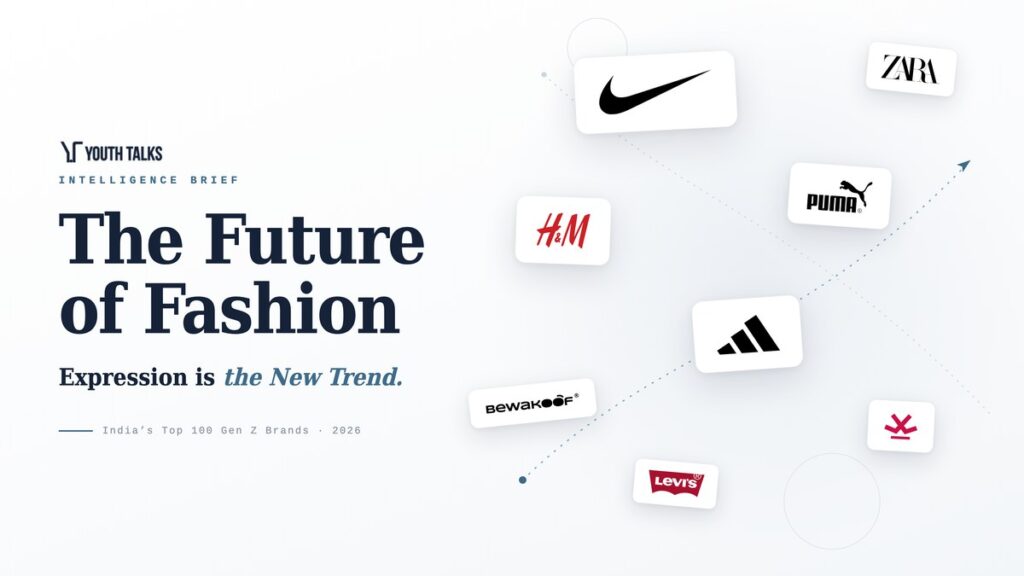
A TheYouthTalks Intelligence Brief | India’s Top 100 Gen Z Brands 2026
For decades, fashion brands competed on familiar battlegrounds.
New collections.
Celebrity campaigns.
Seasonal trends.
Retail expansion.
Success was measured by how many wardrobes a brand entered.
Gen Z appears to be measuring something entirely different.
Our survey of more than 5,000 Indian college students suggests that young consumers are no longer choosing fashion brands simply because they are visible or widely available.
They are choosing brands that help express who they are.
This shift marks one of the biggest changes facing India’s fashion industry.
Fashion is moving beyond apparel.
It is becoming a language of identity.
The Big Finding: Being Worn Isn’t the Same as Being Loved
Some of India’s most recognisable fashion brands continue to enjoy enormous reach among young consumers.
H&M emerged as one of the most widely used brands in our study, reflecting its strong retail presence and accessibility.
Yet when students were asked—without prompts—to name the fashion brand they genuinely loved, H&M was rarely the first name that came to mind.
Instead, brands such as Snitch generated substantially stronger emotional preference relative to their size, while HRX and Bewakoof also demonstrated impressive ability to convert customers into advocates.
This reveals a powerful shift.
Fashion brands may succeed in filling wardrobes.
Only a few succeed in occupying identity.
That distinction will increasingly determine long-term loyalty.
Fashion Has Entered the Identity Economy
For years, the industry believed that visibility naturally translated into preference.
Gen Z appears to disagree.
TheYouthTalks’ Love Score highlights this growing divide by measuring how effectively brands convert usage into genuine emotional affinity.
Brands with strong Love Scores are doing more than selling clothing.
They are helping consumers communicate something about themselves.
Whether it is confidence, individuality, creativity or belonging, successful fashion brands increasingly function as personal symbols rather than simple purchases.
In the identity economy, clothing is no longer the product.
Self-expression is.
Quality Builds Trust. Design Builds Desire.
The research also challenges another common assumption about younger consumers.
Fashion is often portrayed as an impulsive, trend-driven category.
Our findings suggest something far more balanced.
Nearly half of respondents identified quality and durability as their single biggest purchase consideration.
Price and discounts remained important, while design and personal style completed the top three decision drivers.
This paints a remarkably mature picture of Gen Z consumption.
Students are not simply chasing trends.
They are making deliberate trade-offs between value, longevity and self-expression.
Quality earns credibility.
Design creates emotional connection.
Together, they create brands people return to.
Identity Is the Most Powerful Form of Marketing
Fashion has always been social.
Gen Z has made it conversational.
Nearly nine out of ten respondents reported influencing what their friends choose to wear, while most could immediately identify a favourite fashion brand without any prompting.
That matters because fashion recommendations are rarely about garments.
They are about identity.
Every recommendation says something about the person making it.
This helps explain why brands such as HRX, Snitch and Bewakoof generate unusually strong advocacy.
Their customers are not simply purchasing products.
They are participating in communities and lifestyles those brands represent.
In today’s fashion economy, identity travels faster than advertising.
The Next Fashion Leaders Will Build Meaning, Not Just Merchandise
The first generation of fast fashion succeeded through speed and accessibility.
The next generation will succeed through emotional relevance.
As consumers become increasingly selective about what they wear, fashion brands will need to compete on something deeper than inventory and discounts.
The winners will be those capable of creating a sense of belonging.
Brands that stand for a clear point of view.
Brands that feel culturally relevant.
Brands that allow young people to tell the world something about themselves.
The future of fashion belongs not to the brands that produce the most clothing.
But to the brands that create the strongest identities.
Three Strategic Lessons for Fashion Leaders
1. Clothing Is Functional. Identity Is Emotional.
Consumers increasingly choose brands that reflect who they are—not simply what they wear.
2. Quality Creates Confidence. Design Creates Desire.
The strongest brands combine functional excellence with emotional relevance.
Neither is enough on its own.
3. Communities Outlast Collections.
Collections change every season.
Communities become long-term competitive advantages.
The brands that inspire conversation will always outperform those relying solely on visibility.
Monday Morning Memo for Fashion Leaders
Before approving your next campaign, ask three questions.
- If our logo disappeared, would consumers still recognise what we stand for?
- Are customers buying our products—or joining our community?
- What identity does our brand help young people express?
The answers may matter more than next season’s collection.
TheYouthTalks Verdict
India’s fashion industry is entering the identity era.
The next generation of market leaders will not be defined solely by store count, celebrity endorsements or seasonal launches.
They will be defined by their ability to help young consumers express who they are.
Gen Z increasingly sees fashion as more than clothing.
It is confidence.
It is belonging.
It is personality made visible.
The brands that understand this shift will move beyond selling apparel.
They will become cultural symbols for an entire generation.
Download the Complete Gen Z Adored Brands Report
This article highlights just one chapter of a much larger story. The full TheYouthTalks Gen Z Adored Brands Report analyses how more than 5,000 young Indians perceive and emotionally connect with brands across multiple industries—from automobiles and smartphones to fashion, food, finance, entertainment and beyond. If you’re a marketer, founder, researcher or business leader looking to understand what truly drives the next generation of consumers, download the complete report and explore the insights shaping the future of brand building in India. Access your complimentary copy at TheYouthTalks Gen Z Adored Brands: https://theyouthtalks.com/genz-adored-brands/