A TheYouthTalks Intelligence Brief | India’s Top 100 Gen Z Brands 2026
For nearly a decade, purpose has become one of the most powerful ideas in modern marketing.
Brands have pledged sustainability. Companies have embraced social causes. ESG commitments have become annual report highlights, while purpose-led campaigns increasingly dominate advertising calendars.
But one important question has remained largely unanswered.
Do young consumers actually believe these brands?
Our latest survey of more than 5,000 Indian college students suggests they do—but only when purpose feels authentic.
The findings reveal a growing divide between brands that communicate purpose and brands that are genuinely trusted to live it. Some of the most recognised purpose-led brands enjoy significant usage but generate relatively little emotional loyalty. Others, despite smaller reach, inspire remarkable levels of admiration and advocacy.
For marketers, this signals an important shift.
Purpose is no longer a communications strategy.
It is becoming a credibility test.
The Big Finding: Purpose Doesn’t Automatically Build Preference
One of the clearest findings from this year’s research is that visibility alone does not create emotional connection.
H&M Conscious reaches the largest share of students within this category, making it one of the most widely experienced purpose-led brands among Gen Z.
Yet when respondents were asked to name their favourite purpose-driven brand without any prompts, very few mentioned it.
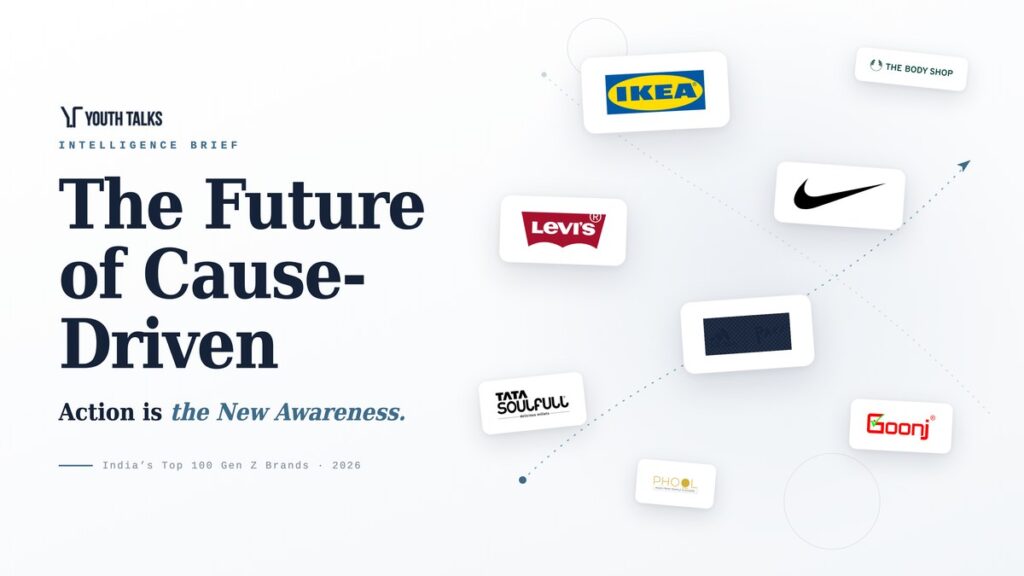
Meanwhile, brands such as Nike, The Body Shop and Goonj generated significantly stronger emotional preference relative to their scale.
This is not simply a ranking.
It represents an important strategic insight.
Consumers increasingly distinguish between brands that talk about purpose and brands they genuinely believe are creating impact.
That distinction is likely to define the next generation of brand loyalty.
Purpose Has Become a Trust Signal
For many years, companies assumed that communicating sustainability or social responsibility would naturally improve brand perception.
Gen Z appears to demand a higher standard.
When asked what influences their choice of purpose-driven brands, environmental sustainability emerged as the strongest consideration, followed by fair trade and ethical wages, and education and skills development.
Together, these priorities account for nearly nine out of every ten purchase decisions in this category.
The message is remarkably clear.
Young consumers are not rewarding purpose because it sounds inspiring.
They reward purpose when they believe it creates measurable impact.
For this generation, values are no longer marketing language.
They are buying criteria.
Authenticity Travels Faster Than Advertising
Perhaps the most valuable asset revealed by this research is neither awareness nor market share.
It is advocacy.
More than nine in ten respondents reported influencing the purchasing decisions of people around them.
Yet recommendations are not distributed equally.
Students recommend brands that reinforce their own beliefs and values.
Supporting a purpose-driven brand has become a form of personal expression.
Every recommendation signals something about the person making it.
This helps explain why organisations such as Goonj and The Body Shop generate emotional affinity that extends beyond product usage.
Their strongest marketing asset may not be advertising at all.
It is credibility.
In today’s marketplace, credibility travels through conversations long before it appears in campaigns.
The Credibility Gap
The most significant challenge facing established brands is not becoming more visible.
It is becoming more believable.
Many companies have successfully integrated sustainability into their messaging.
Far fewer have integrated it into consumer perception.
That gap between intention and trust is where brands either strengthen or weaken long-term loyalty.
Purpose cannot remain confined to annual reports or campaign slogans.
Gen Z expects it to be visible in products, sourcing, pricing, partnerships and everyday business decisions.
For marketers, this represents a profound shift.
The conversation is moving from “What does the brand say?”
to
“What does the brand actually do?”
Three Strategic Lessons for Purpose-Led Brands
1. Purpose Creates Value Only When It Creates Trust
Consumers increasingly reward brands whose actions consistently reinforce their stated values.
2. Sustainability Is No Longer a Differentiator. Authenticity Is.
Most brands now communicate purpose.
The brands that stand out are those that demonstrate it.
3. Credibility Is Becoming the New Brand Equity
Distribution builds awareness.
Purpose builds relevance.
Credibility builds advocacy.
The companies that combine all three will define the next generation of category leaders.
Monday Morning Memo for Brand Leaders
If your organisation invests in purpose-driven marketing, ask three questions before approving your next campaign.
- Would consumers recognise our purpose if we stopped talking about it?
- Are we measuring awareness—or trust?
- Is our impact visible in everyday customer experiences, or only in our communications?
Purpose is no longer judged by what brands promise.
It is judged by what consumers believe.
TheYouthTalks Verdict
India’s purpose economy is entering a new phase.
For years, brands competed to be seen supporting meaningful causes.
Gen Z now expects something more demanding.
They expect consistency.
This generation does not reward purpose because it appears in advertising.
It rewards purpose because it is reflected in behaviour.
The companies that successfully embed social and environmental responsibility into the fabric of their business—not simply into their storytelling—will earn something increasingly difficult to buy in modern marketing.
Trust.
And in the decade ahead, trust may become the most valuable competitive advantage any purpose-driven brand can possess.
Download the Complete Gen Z Adored Brands Report
This article highlights just one chapter of a much larger story. The full TheYouthTalks Gen Z Adored Brands Reportanalyses how more than 5,000 young Indians perceive and emotionally connect with brands across multiple industries—from automobiles and smartphones to fashion, food, finance, entertainment and beyond. If you’re a marketer, founder, researcher or business leader looking to understand what truly drives the next generation of consumers, download the complete report and explore the insights shaping the future of brand building in India.
Access your complimentary copy at TheYouthTalks Gen Z Adored Brands: https://theyouthtalks.com/genz-adored-brands/