

Bringing AI and Real-World Commerce Into the Marketing Classroom
Marketing education is entering a new phase. The traditional boundaries between creativity, consumer research, media, analytics and commerce are rapidly disappearing, and the next generation of marketers will need to navigate all of them with confidence.
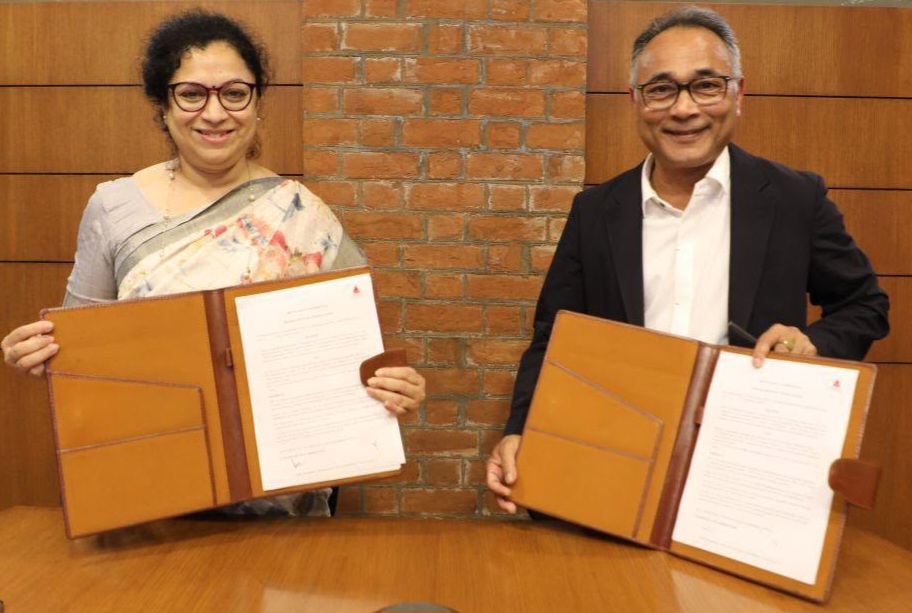
Recognising this shift, MICA and Komerz have announced a strategic partnership aimed at preparing students for an increasingly AI-driven commercial landscape.
The first phase of the programme will give more than 400 MICA students hands-on access to Komerz OS, the company’s AI-powered commerce operating system. Rather than learning AI purely through theory, students will work with enterprise-grade tools, live business datasets and practical commercial decision-making environments.
That distinction matters.
A student may understand the principles of consumer behaviour in a classroom, but applying those principles to a live commercial problem—with data, technology and business outcomes involved—is a very different experience.
From Marketing Theory to Commercial Decision-Making
The programme will comprise four modules covering areas including brand strategy, consumer intelligence, omnichannel commerce, marketplace strategy, retail media, revenue growth management and commercial analytics.
This reflects a broader transformation taking place within organisations. Marketing can no longer operate in isolation from sales, supply chains, finance or technology.
Consider a simple example. A brand deciding whether to launch a product in a new market may once have relied heavily on consumer research and brand intuition. Today, that decision can involve demand forecasting, channel performance, pricing data, marketplace behaviour and AI-assisted analysis.
The marketer increasingly sits at the intersection of these disciplines.
For students, therefore, becoming “AI-enabled” is not simply about knowing how to use generative AI tools. It means understanding how technology, data and commercial intelligence can influence business decisions.
As MICA Director & CEO Jaya Deoras Deshmukh noted, AI is changing not only the tools marketers use but also the skills organisations expect from them.
Why Industry Exposure Matters
MICA has spent more than 35 years developing marketing professionals through an interdisciplinary approach centred on creativity, consumer insight and strategic thinking. The partnership with Komerz extends that philosophy into an environment where students can interact with the technologies increasingly used by businesses.
It also addresses a familiar challenge in management education: the gap between what students learn and what employers expect them to do.
Imagine a young marketing graduate joining a company and being asked to interpret customer data, assess channel performance and recommend where the next marketing rupee should be spent. Knowing marketing frameworks is useful, but being able to make sense of actual commercial information is what makes that knowledge actionable.
This is where hands-on exposure can make a difference.
The Rise of the Commercially Fluent Marketer
Komerz, founded in the UK in 2023, developed Komerz OS to help brands make faster commercial decisions by connecting data, intelligence and execution across the commercial value chain.
Its involvement in the programme points towards an important evolution in the role of the marketer.
The marketer of tomorrow may need to be creative enough to build a compelling brand, analytical enough to understand performance data and commercially minded enough to connect those decisions to revenue and growth.
As Komerz Founder & CEO Ramesh Krishnamurthy put it, marketing is increasingly becoming an “intelligent commercial system” rather than a collection of disconnected functions.
That could become one of the defining skills of the next generation of marketing professionals: the ability to connect creativity with commercial intelligence.
Beyond the Classroom
The MICA-Komerz collaboration is also expected to extend beyond student learning. The two organisations plan to work together on joint research, executive education, industry publications, innovation programmes, conferences, internships and thought leadership initiatives.
In doing so, the partnership has the potential to create a broader bridge between academia and industry.
The bigger question is whether other institutions will follow the same path.
AI is changing marketing faster than traditional curricula can often adapt. Preparing students for that reality may require universities and business schools to move beyond teaching about technology and start giving students meaningful opportunities to work with it.
The future marketer will not simply ask, “What campaign should we create?”
They will increasingly ask: What does the data tell us, what can AI help us discover, and how can we turn that intelligence into growth?
That is the kind of marketer businesses will increasingly need—and the kind of education partnerships such as MICA and Komerz are attempting to build.