
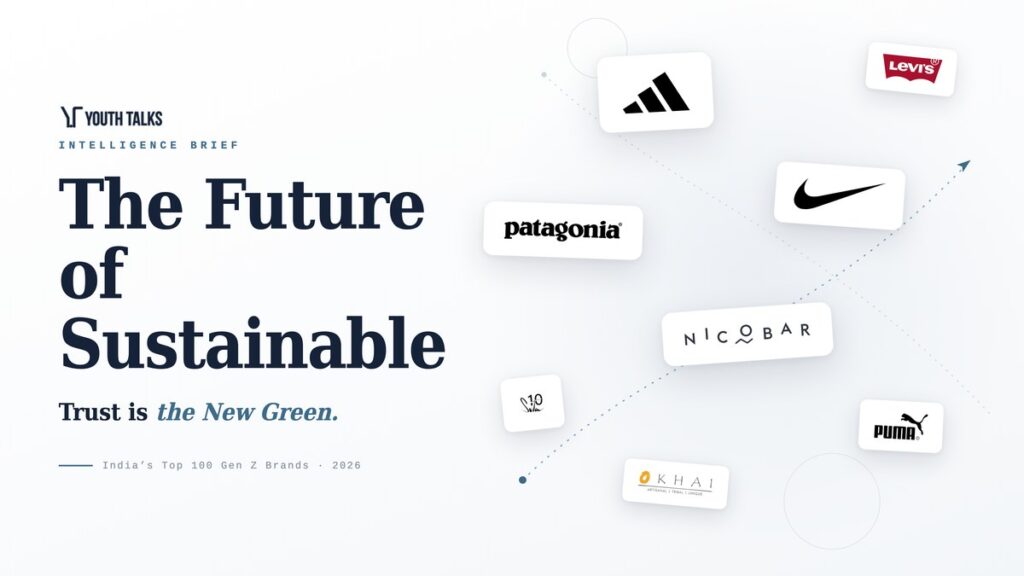
A TheYouthTalks Intelligence Brief | India’s Top 100 Gen Z Brands 2026
For years, sustainable brands competed on familiar promises.
Eco-friendly materials.
Ethical sourcing.
Responsible manufacturing.
A better future for the planet.
The assumption was simple: if consumers cared about sustainability, they would naturally choose sustainable brands.
Gen Z is quietly changing that equation.
Our survey of more than 5,000 Indian college students suggests that young consumers are no longer separating sustainability from the rest of the buying decision. They expect ethical brands to deliver the same value, quality and design as every other brand they consider.
Sustainability is no longer a niche proposition.
It is becoming an expectation.
The Big Finding: Being Chosen Isn’t the Same as Being Trusted
Puma emerged as one of the most widely used brands associated with sustainability in our research, reflecting its broad accessibility and market presence.
Yet when students were asked an unprompted question—“Which sustainable or ethical brand do you genuinely love?”—the picture changed.
Adidas emerged as the strongest emotional brand, while brands such as Nicobar, Okhai and The Body Shop demonstrated a greater ability to transform customers into loyal advocates.
The distinction matters.
Availability creates purchases.
Trust creates loyalty.
Many brands succeed in entering consumers’ wardrobes.
Only a few earn the credibility to stay there.
In sustainability, authenticity compounds faster than visibility.
Sustainability Has Entered the Trust Economy
At TheYouthTalks, we measure this shift through our Love Score—the relationship between brand usage and unprompted consumer preference.
Within sustainable and ethical brands, the score reveals something traditional sales data often cannot.
Consumers are not rewarding brands simply because they make sustainability claims.
They reward brands they genuinely believe.
The Body Shop demonstrates how emotional trust can exceed market presence, while Puma highlights the opposite challenge: significant usage without the same depth of emotional attachment.
The lesson is increasingly clear.
Purpose attracts attention.
Trust earns advocacy.
Great Values Don’t Replace Great Products
One of the biggest misconceptions about Gen Z is that sustainability alone drives purchasing decisions.
Our research suggests otherwise.
Price and affordability emerged as the strongest purchase driver, followed by product quality and durability, with eco-friendly materials ranking close behind.
Together, these factors account for the overwhelming majority of purchase decisions.
This reveals a generation that is remarkably pragmatic.
Young consumers are not asking brands to choose between purpose and performance.
They expect both.
The sustainable brands that succeed will not be those that ask consumers to compromise.
They will be those that make ethical choices feel effortless.
Sustainability Is Becoming Social
Ethical consumption has traditionally been viewed as an individual decision.
Gen Z is turning it into a shared conversation.
More than eight in ten respondents said they influence what friends and family purchase, while every respondent could immediately name a sustainable brand they genuinely admired.
Recommendations have become one of the category’s most valuable growth engines.
Brands such as Nicobar, Okhai and Adidas benefit because consumers do more than purchase their products.
They proudly recommend them.
In the trust economy, every satisfied customer becomes proof that sustainability can be desirable, accessible and credible.
Every Brand Occupies a Different Position
Viewed through both usage and emotional preference, three strategic positions emerge.
Champions such as Nicobar, Okhai and Adidas successfully transform purchases into lasting emotional loyalty.
Workhorses, including Suta, No Nasties and Khaadi, enjoy meaningful awareness but have opportunities to deepen emotional trust and consumer advocacy.
Meanwhile, Niche Darlings like Patagonia demonstrate that even brands with modest reach can become powerful symbols of authenticity and purpose.
The next generation of leaders will not simply sell sustainable products.
They will build trusted relationships.
Three Strategic Lessons for Sustainable & Ethical Brand Leaders
1. Purpose Creates Interest. Trust Creates Loyalty.
Consumers may notice sustainability claims.
They remain loyal only when those claims are consistently supported by product quality and authentic behaviour.
2. Ethics Must Be Invisible, Not Inconvenient.
Young consumers increasingly expect sustainability to be built into the product—not marketed as a premium feature that demands compromise.
3. Credibility Travels Faster Than Campaigns.
Recommendations from trusted customers remain the strongest evidence that a brand’s values are genuine.
In sustainability, reputation is earned one customer at a time.
Monday Morning Memo for Sustainable Brand Leaders
Before launching your next sustainability initiative or campaign, ask three questions.
Are we communicating our purpose—or proving it through our products?
What evidence do consumers have that they can trust our claims?
If our sustainability messaging disappeared tomorrow, would our products still reflect our values?
The answers may matter far more than your next environmental campaign.
TheYouthTalks Verdict
India’s sustainable and ethical brands are entering the trust economy.
The next generation of category leaders will not be defined solely by certifications, sustainability reports or responsible sourcing.
They will be remembered for making ethical choices practical, affordable and genuinely desirable.
Gen Z increasingly rewards brands that combine purpose with performance and values with everyday usefulness.
Because in the future of sustainability, consumers won’t simply buy brands that promise to do good.
They will choose the brands they trust to do it.
Download the Complete Gen Z Adored Brands Report
This article highlights just one chapter of a much larger story. The full TheYouthTalks Gen Z Adored Brands Report analyses how more than 5,000 young Indians perceive and emotionally connect with brands across multiple industries—from automobiles and smartphones to fashion, food, finance, entertainment and beyond. If you’re a marketer, founder, researcher or business leader looking to understand what truly drives the next generation of consumers, download the complete report and explore the insights shaping the future of brand building in India.
Access your complimentary copy at TheYouthTalks Gen Z Adored Brands: https://theyouthtalks.com/genz-adored-brands/